Answers · Pricing
How Much Does AI Video Generator Cost?
Published November 18, 2026

Why the price is per second
Generating video is expensive computing. Every second of output means many frames, each drawn by a large model, and the cost rises with resolution, length and the size of the model. That is why almost every generator prices by the second, directly or through credits, and why unlimited plans for video either disappear or come with slow queues and low resolution. The shock is a common first reaction; one newcomer's post in r/generativeAI was titled
Is generating videos actually this expensive?
It is one of the most repeated questions in the corpus: about 640 posts ask some version of it.
The three ways it is sold
Credits. You buy a pack, each second of video uses some credits, and the rate depends on the tier you pick. Subscriptions. A monthly fee buys a credit allowance, usually at a better rate than packs, with rules about whether unused credits carry over. Free tiers. A small allowance with limits: short clips, slow queues, low resolution or a watermark. The headline price matters less than the rate per usable second.
Before buying, read the small print that changes the real rate: whether credits expire, whether a monthly allowance rolls over, whether higher resolution or longer clips cost extra, and whether voice, music or subtitles are charged on top. Two plans with the same monthly price can buy very different amounts of finished video once those rules are applied.
What it costs on SceneMixer
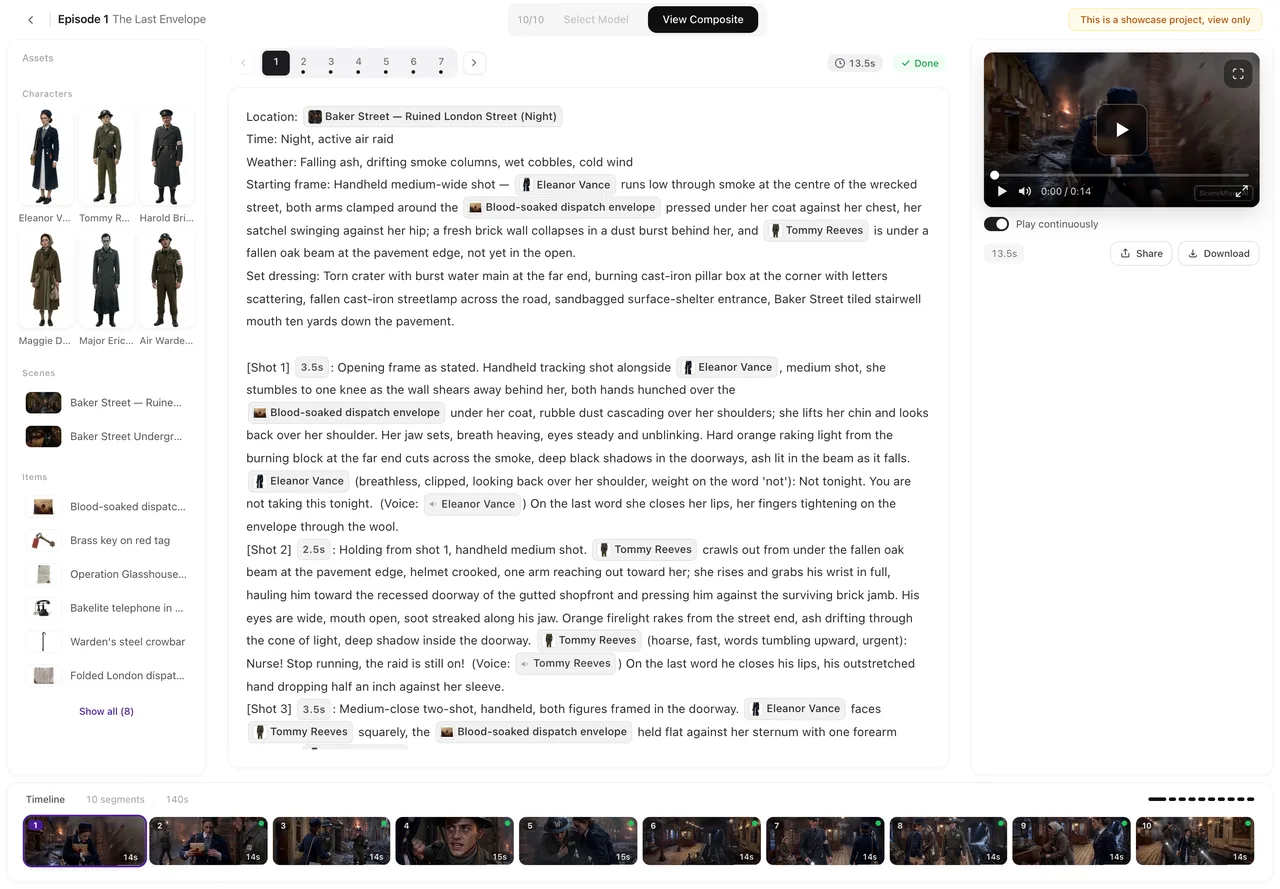
Video is priced per second by tier, from $0.06 a second (10 credits) on the default tier up to $0.47 on the top tier, and every price is shown on the button before you press it. Joining segments into an episode costs 1 credit a second. A 60-second episode on the default tier is about 660 credits with compositing, about $4.11 at the lowest credit price. Credit packs start at $1.49 and plans at $7.99 a month. A new account gets 50 signup credits and its first 15 setup images free; editing the storyboard text never costs anything.
What really decides the bill: retakes
The first render is rarely the last. A shot with a wrong hand, a face that drifted or a line delivered badly gets generated again, and each retake costs the full per-second rate. A realistic budget assumes some of every episode will be made twice. The cheapest seconds are the ones you never render: read the storyboard as text, fix it there for free, and only then generate. Drafting at a low tier and finishing only the keepers at a higher one can save money when retakes are frequent, and cost more when they are not.
Budgeting a series
Work out the cost of one finished minute first, including the retakes you expect, then multiply. A series of ten short episodes is mostly the same arithmetic ten times, plus whatever the first episode taught you about which shots need second attempts. Setup is cheaper than it looks: characters, places and props are drawn once and reused in every episode, so the second episode does not pay for the cast again. Plans suit a steady weekly output; credit packs suit an irregular one. Either way, decide the tier per project rather than per shot, because mixing tiers inside one episode makes the result look uneven.
Failed generations
Check what a tool does when a generation fails, before you buy. Failure rates for long or complex shots are not small anywhere, so a tool that bills for its own failures costs more than its headline rate suggests, and that matters more than a few cents on the rate itself. On SceneMixer the message on a failed generation says what went wrong, so you can fix the storyboard text before trying again.
Limitations of comparing AI video prices
- Headline rates hide retakes; compare the cost of a usable minute, not a generated one.
- Resolution, length limits and queue speed differ between plans with the same price.
- Prices change often across the industry; check the current rate before planning a series.
- SceneMixer's prices are per second by tier and are always shown before you generate.
- The pricing-question count is a rule-based match over a fixed window of public posts.
FAQ
How much does an AI video generator cost per minute?
It depends on the tier and the retakes. On SceneMixer the default tier is the cheapest per second, and each segment's price is shown before you generate.
Are there free AI video generators?
Free tiers exist with limits on length, speed or watermarks. On SceneMixer setup images have a free allowance; video is charged from the first second.
Why are AI video generators so expensive?
Each second is many frames drawn by a large model; higher resolution and longer clips multiply the compute.
Do I pay for failed AI generations?
No. On SceneMixer a failed generation is not charged; in a few cases support checks it before the credits come back.
Related: why AI video costs what it does, the cost of an AI movie, drafting cheaply and finishing high, and the collection method behind the count.
See the price before you press
Every segment shows its cost on the button; editing the words is always free.
Sign up freePer-second video rates are on the pricing page with the same numbers.