Answers · Comedy
How to Make Funny AI Videos?
Published November 17, 2026

AI funny videos work when the timing is written
Comedy is one of the most popular things people make with AI video, and some of it lands. Two titles from r/aivideo show the range:
If you think AI Video can't be funny then explain this
My medieval sitcom is really coming together
The second, a running sitcom shared in r/aivideo, is the more useful model, because a sitcom repeats: the same people, the same rooms, a new situation each time. How audiences react is a big subject in the community corpus, about 7,000 posts, and with comedy the reaction comes down to timing more than anything else.
Set-up, beat, reaction
A joke on screen needs three things, each with its own seconds: the set-up, a beat where nothing happens, and the reaction. Write them as separate shots. The punchline goes in one shot, and the other character's face in the next; the laugh usually comes from the reaction, not the line. Put the pause in the delivery note — "after a long silence", "without looking up" — so the voice waits instead of rushing.
Characters with one loud trait
Comedy characters are simple on purpose: the one who panics, the one who lies badly, the one who is far too calm. Write the trait into the character description and the voice description, and every situation then shows it. A described voice — flat and bored, breathless and too fast — does a lot of the comic work, and it stays the same across episodes because it belongs to the character.
A trap, and one home base
The best comedy setups trap people together: flatmates, a family, a shop with one customer who never leaves. Give them one living room or one office and come back to it. On SceneMixer each place is drawn once and reused, so the sofa is always where it was, and the audience knows where the door is before someone comes through it.
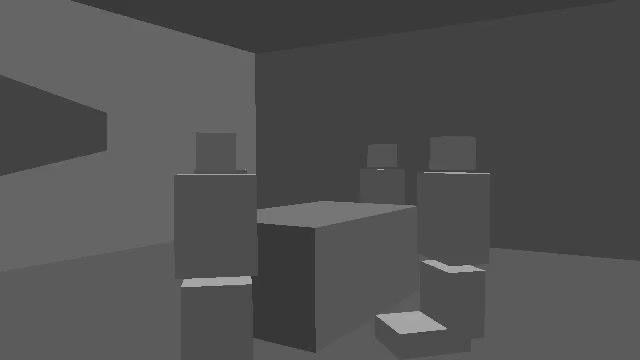
A sketch laid out shot by shot
Here is how one small joke becomes shots. Two flatmates, one kitchen, the last slice of cake.
- Wide, four seconds: the kitchen at night; one flatmate opens the fridge. No dialogue.
- Close-up, three seconds: the empty plate with a fork laid neatly across it.
- Medium, four seconds: the second flatmate in the doorway, mouth full, speaking very calmly: "I have no idea what happened."
- Close-up, three seconds: the first flatmate's face. No dialogue.
- Wide, three seconds: crumbs falling from the second flatmate's sweater as they walk away.
The line is in shot three, but the laugh is in shots four and five: the silent stare and the evidence. Each beat has its own seconds, so nothing is rushed.
Running jokes across episodes
A series earns its biggest laughs from repetition: the catchphrase that comes back, the door that always sticks, the neighbour who only ever says one word. Keep a short list of these next to the script. Because the cast and the rooms are reused from episode to episode, the callback looks exactly like the original, which is half of why it works.
Sketches or a running sitcom
For one-minute sketches, pick Short Drama as the type; for a classic sitcom episode with several scenes, pick TV Series, which allows episodes up to five minutes. Write a situation that escalates — a small lie in the first scene, a bigger one in the second, the collapse in the third. Keep slapstick simple: one fall, one spill, one door, each as its own shot.
Limitations of AI comedy
- Timing is set per shot in seconds, so split-second gags need more than one try.
- Physical comedy with several bodies colliding is the hardest thing to get right.
- Visual jokes that depend on written words do not work, because the frame is not lettered reliably.
- Parodies of real people or famous shows are refused; the characters must be your own.
- The audience figure is a rule-based topic count over a fixed window of public posts.
FAQ
Can AI be funny?
The jokes are still yours. What AI can do is perform them, if the script gives the set-up, the beat and the reaction their own shots.
How do I make funny AI videos for TikTok?
Make a 9:16 project with a small cast, write each video as one situation with a reaction shot at the end, and post it as a series.
Can I parody a famous show or celebrity?
No. Real people and well-known characters are refused; invent your own cast and put them in a familiar kind of trap.
Which type should I use for comedy on SceneMixer?
SceneMixer's Short Drama suits one-minute sketches; TV Series suits sitcom episodes of a few minutes.
How to create funny AI videos people share?
Build a small cast with one loud trait each and give every joke its own reaction shot; SceneMixer keeps the faces and rooms the same, so running jokes land.
Related: making an AI sitcom or comedy skit, brainrot videos, and the collection method behind the figure.
Write a set-up and a reaction
A small cast, one room, the pause in the delivery note. Read the shot list before rendering.
Sign up freePer-second video rates are on the pricing page with the same numbers.