How to Make an AI Sitcom or Comedy Skit

Brief for AI Create: A sitcom: three flatmates discover their landlord has been living in the cupboard under the stairs for a month; nobody wants to be the one to tell him to leave; each episode one of them tries and fails; dry, awkward, warm.
What makes a sitcom work
- A trap. People who cannot leave each other: flatmates, a family, colleagues, a shop with one customer who never goes home.
- Fixed characters. The one who panics, the one who lies, the one who is far too calm. Each episode puts them in a situation that shows exactly that trait.
- A situation that escalates. A small lie in scene one, a bigger one in scene two, the whole thing collapsing in scene three.
- Home base. One living room, one kitchen, one office. Comedy is easier when the audience knows where the door is.
- A button. The last line of the episode: one more joke after the story is over.
A sketch is the same machine at a smaller size: one premise, three escalations, a button.
Timing, written into the shots
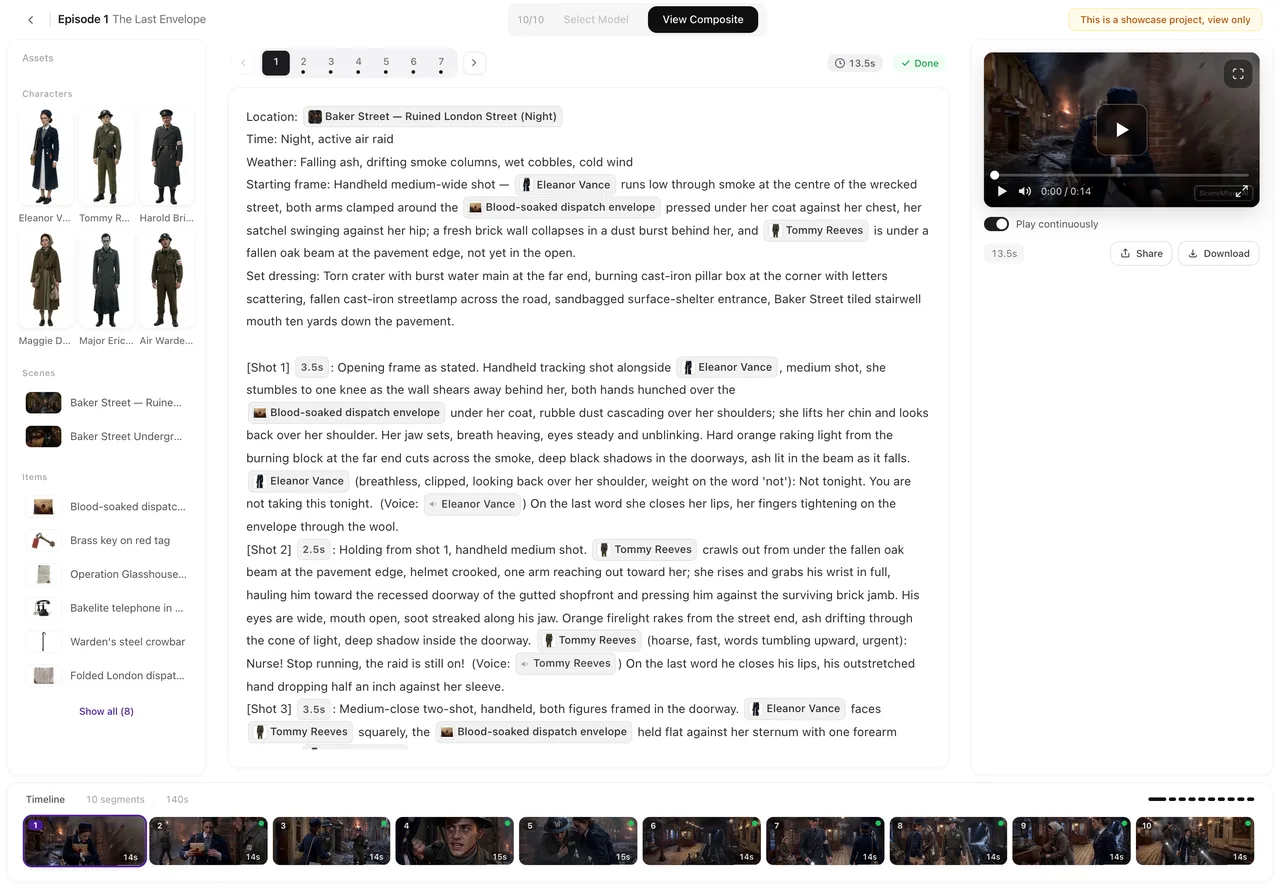
AI video plays a shot for the seconds you give it. A joke crammed into one shot with its reaction will usually step on its own laugh. Separate the beats:
| Beat | Shot to adapt |
|---|---|
| The set-up | [Shot 1] 5s: Opening: medium shot, the kitchen. @Priya and @Tom at the table; @Priya slides a mug toward him. @Priya (brightly): So. Who’s going to tell him? @Tom lips closed, no lip movement. Ambient: the fridge humming. |
| The beat | [Shot 2] 2s: Close-up. In frame only: @Tom. He looks at the mug. He looks at her. No dialogue. |
| The punchline | [Shot 3] 3s: Close-up. In frame only: @Tom. @Tom (flat): I’ve been paying him rent. In cash. Through the door. |
| The reaction | [Shot 4] 3s: Close-up. In frame only: @Priya, frozen mid-sip. No dialogue. Ambient: a cupboard door creaks in the hall. |
Shot 2 is the most important shot in the scene and it has no words in it. Shot seconds and timing · How to write one shot.
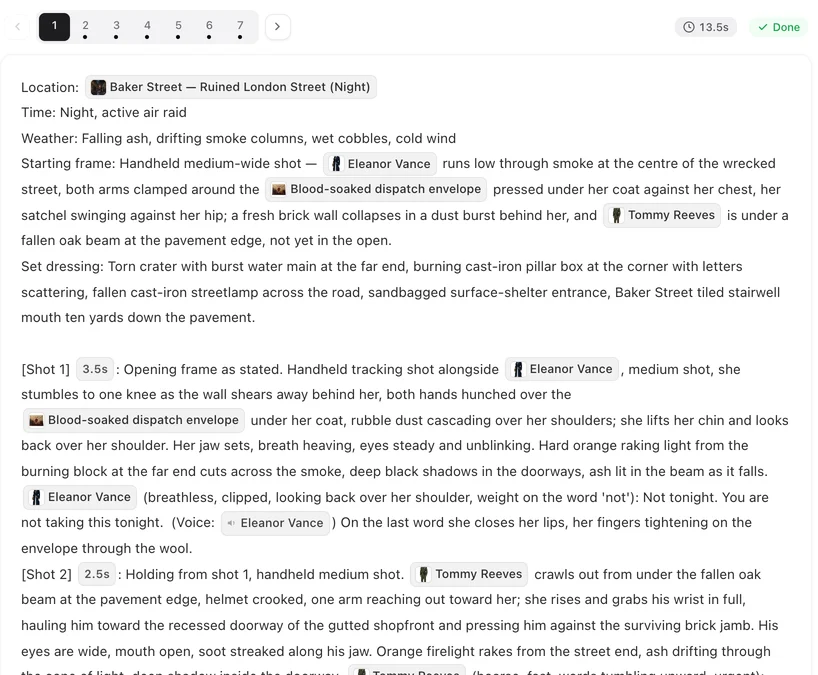
Delivery notes are where the comedy lives
The brackets at the start of a line tell the voice how to say it. In comedy they carry half the joke: (far too casually), (whispering, though nobody else is there), (a beat too late), (very slowly, as if to a child). Write the pause where you want it: (pauses, then). Keep each line short enough for its seconds — about three words a second in English — because a rushed punchline is a dead one. Dialogue in the storyboard.
A cast and a set that never change
- Same faces. Each regular is a character with a card and an image, kept the same in every episode. Give each one a visual signature that matches their trait: the anxious one always in a cardigan, the liar always in sunglasses.
- Same living room. The flat is a location with its own image, so the sofa is where it was last week. Positions in a scene hold from shot to shot. Same room in every episode · Everyone stays put.
- Three named people per shot, at most. A party scene is the background line plus the two people the joke is about. Background people.
- Voices with a temperature. Dry, low, never surprised; high, fast, always apologising. Contrast between voices is a joke machine. How character voices work.
Settings to pick in step 1
- Type: TV Series for an episode with room for scenes to build; Short Drama for one-minute sketches with a button at the end.
- Aspect Ratio: 16:9 Landscape for a classic sitcom; 9:16 Portrait for sketches on TikTok and Reels.
- Visual Style: Realistic HD for live-action comedy; 3D Toy Cartoon, Feature 3D Animation or 2D Cel Shading for animated comedy; Claymation for something handmade.
- Scene Style: Nordic Minimal or Soft Romance for a flat, Corporate Cold for an office comedy, American Small Town or Street Life for a neighbourhood one.

Visual Style: Realistic HD

Visual Style: 3D Toy Cartoon

Visual Style: Feature 3D Animation

Visual Style: Claymation
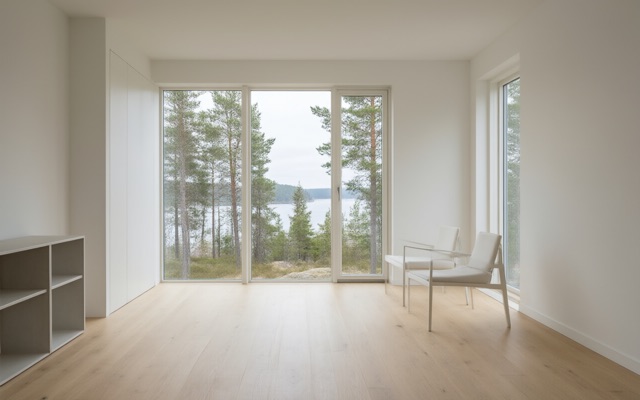
Scene Style: Nordic Minimal

Scene Style: Corporate Cold
What to keep out of the joke
Parody of real people — a celebrity, a politician — is not material here: real faces and voices are not generated, and known characters from other shows trigger the IP check. Write your own cast and let the situation be the target. Keep it broadcast-friendly; anything sexual is not generated. Content rules.
Make it in SceneMixer, start to finish
- Script: your own on Upload Script, or a brief in AI Create with the trap, the characters’ traits, the situation and the tone.
- Step 1: the settings above; read the script.
- Step 2: generate the regulars and the home base; give each a visual signature.
- Storyboard: episode 1 first (free on your first project). Split every punchline from its reaction and give the beat its own shot.
- Video: generate on the default tier at 10 credits a second; if one joke misses, regenerate that segment only.
- Finish: composite. An episode can carry its own score; switch the composite’s Music off if you would rather the jokes land in silence. Background music.
| Format | Type | Length | Shape |
|---|---|---|---|
| Sketch | Short Drama | About a minute | Premise, three escalations, a button |
| Sitcom episode | TV Series | A few minutes | A problem, a lie, a collapse, a button |
| Animated comedy | Short Drama or TV Series | Either | Same as above, with an animation style |
FAQ
Can AI make a sitcom that is actually funny?
The jokes are yours; the timing is what you control in the storyboard. Give the punchline and the reaction separate shots, write the pause into the delivery note, and keep lines short enough for their seconds.
Why does my punchline feel rushed?
The shot has too many words for its seconds, or the reaction is in the same shot. Split it, and give the beat before the punchline its own two-second shot.
How do I keep the same living room every episode?
Make it a location with its own image. Every episode set there uses the same reference, and positions hold within a scene.
Can I make an animated sitcom?
Yes. Choose 3D Toy Cartoon, Feature 3D Animation, 2D Cel Shading or Claymation in step 1.
Can I parody a celebrity or a famous show?
No. Real people's faces and voices are not generated, and known characters trigger the IP check. Write your own cast.
Should a sitcom have music?
An episode can carry its own score; you can switch it off on the composite. Many sitcoms play better with only room sound.
How long should a sketch be?
About a minute for feeds: one premise, three escalations, a button. Pick Short Drama and 9:16.
Can I keep making episodes with the same cast?
Yes. Add episodes to the same project and the cast and rooms carry over.
Updated October 13, 2026
Pricing·Novel to Video·Guides·Samples·Support·Privacy·Terms·Legal·Contact·Affiliate program·© 2026 SceneMixer