Answers · Marketing
What Is UGC?
Published November 18, 2026

What does UGC stand for?
UGC is short for user-generated content: anything the users of a product or a platform make themselves, as opposed to what the company publishes. A review with a photo, an unboxing filmed on a phone, a tagged post of a meal, a forum answer, a fan edit: all UGC. In its plain sense it still means exactly that: made by the people who use the thing, not by the people who sell it.
In marketing the word has stretched. Brands noticed that a shaky phone video of a real person holding the product often outsells a polished advert, and they began to ask for more of it, then to pay for it, then to copy its look in their own ads. Today "UGC" can mean any of those three things, and conversations about it go wrong when two people mean different ones.
What is UGC content, and why do brands want it?
Customer content does three jobs that brand content struggles with. It is believed, because the person in it has nothing to sell. It is specific, because it shows the product in an ordinary kitchen or bathroom rather than a studio. And it is plentiful, because a popular product collects far more posts than any team could produce. Brands reuse it on product pages, in emails and in paid social, usually after asking the poster for permission.
That last step matters. A post being public does not make it free to use in an advert; the person who made it owns it, and platforms and shops have their own rules about reposting. Most brands keep a simple record of who agreed to what, for how long and where.
What is a UGC creator?
A UGC creator is someone paid to make content that looks like a customer made it. Unlike an influencer, they are not hired for their audience; the brand posts the video on its own account or runs it as an ad. The work is usually a handful of short vertical clips: a hook in the first seconds, the product being opened or used, a reaction, a plain verdict, sometimes several versions of the opening so the brand can test which one holds people.
This is real work done by real people, and the videos are honest in one sense and not in another. The person did use the product, but they were paid to talk about it, so platforms ask for paid partnerships to be marked as such.
What is a UGC video, and what are UGC ads?
A UGC video has a recognisable shape. The phone is held or propped up, the light is whatever the room has, one person speaks to the camera in their own words, and the product is handled rather than displayed. There is no announcer, no music swell, no logo animation until the very end. When that video is run as paid media it becomes a UGC ad, and the same rules about permission and disclosure come with it.
In AI video communities this has become one of the busiest subjects. About 11,000 posts in the community corpus are tagged with ads, UGC or commercial work, and a single question about how to make AI UGC ads has about 440 posts like it. A typical post in r/aivideo is a test of the style rather than a sale:
Tried a realistic UGC-style video with a subtle twist
That framing, a style rather than a source, is the honest way to describe anything generated. What AI UGC is goes further into why the generated kind is a different thing from the real one.
Making UGC-style ads with SceneMixer
SceneMixer's UGC-style ads start from a product photo and one line about it. The Creator unboxing ad type is the closest to the format above: a generated person opens the product on their own phone camera, tries it and says what they think, and the ad ends on your name. A generator cannot make a customer, so what it can make is a UGC-style ad; there are no real creators and no face swap, the voices are generated too, and the result should be called an ad and labelled as one.
The ad composer has five pickers. Length is 15, 30 or 60 seconds, Format is landscape or portrait, and Quality is 480P, 720P or 1080P, with the price of each shown in the menu. Portrait suits the feeds where UGC-style ads usually run.
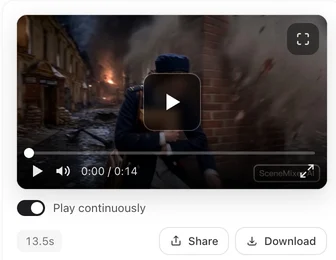
A generated ad is useful for testing an angle, a product shot or an opening before paying a creator, or for products that are awkward to film. It is not a substitute for what customers say about you, and it should never be presented as a customer's own post.
Limitations of UGC and UGC-style ads
- Reposting a customer's content needs their permission; being public is not the same as being licensed.
- Paid creator videos are advertising, and platforms ask for them to be marked as paid partnerships.
- A UGC-style ad made by AI shows no real customer; label it as an ad and use the platform's AI setting where it applies.
- SceneMixer does not swap faces or put a real person into an ad.
- The ads and UGC figures come from rule-based tags on public posts in a fixed window, so they show how often the subject comes up, not how many people make such ads; see the collection method.
FAQ
What is a UGC ad?
An advert built from content in the customer style: a person on a phone camera, the product in their hands, their own words. It may be real customer content used with permission, a paid creator's video, or a generated UGC-style ad.
How do you become a UGC creator?
Make a few sample videos in the format brands buy, short vertical clips with a clear hook and an honest verdict, and pitch them to brands directly. It is paid work, so agree on usage rights and how long the brand may run the video.
Is AI UGC real UGC?
No. UGC means content a customer made, and a generated video has no customer behind it. It can copy the style, which is why SceneMixer calls its output UGC-style ads and asks you to label them.
Can SceneMixer make UGC-style videos?
Yes. Upload a product photo, write one line and pick the Creator unboxing type; SceneMixer generates a person trying the product on their phone camera, in portrait, at the length you choose.
Related: what AI UGC is, making AI UGC-style ads, the AI UGC ad generator, the AI ad video generator, and the collection method behind the counts.
Test the angle before you hire the creator
Upload a product photo, write one line, and SceneMixer makes a UGC-style ad you can label and post.
Sign up freePer-second video rates are on the pricing page with the same numbers.