Answers · Writing
How to Write a Story?
Published November 18, 2026

How to write a story: start with the spine
Stories that stall rarely stall on the sentences. They stall because one of four parts is missing: someone to follow, something they want, something in the way, and a change by the end. A beautifully described town with no one wanting anything in it is a setting, not a story. A character who wants something and gets it on the first page has no story either.
So begin with the spine, in plain words, before any scene: who is this about, what do they want, what stops them, and how does it end? Write it as one or two sentences and keep it in front of you. Everything else in the draft either serves that line or can go.
How to structure a story
Most stories fall into three movements, whatever names a writing book gives them. The opening shows the character's world and the moment it is disturbed. The middle is a run of attempts, each one meeting more resistance and costing more, usually with a turn halfway through that changes what the character thinks the problem is. The ending brings the want and the obstacle face to face and settles it.
The useful part of structure is not the labels but the turns. A turn is an event after which the situation cannot go back: a secret comes out, a door closes, a friend changes sides. If a scene ends exactly where it began, it is usually a scene to cut or to merge with the next one.
What is a story outline? How to outline a story
A story outline is the list of scenes or beats in order, each with one line about what happens and what changes. It can be a dozen bullet points or a page of notes; its job is to let you see the shape before you spend weeks on prose. To outline a story, write the spine, list the turns, then fill in the scenes that lead from one turn to the next. Move scenes around while they are still one line each; it is far cheaper than moving them as finished pages.
Writers increasingly use pictures alongside the outline. One post in r/aiArt describes the habit:
Whenever I write stories, if I start with a scene in mind, I generate an image of it.
Turning stories into something visual is a large part of AI video communities, too: about 7,300 posts in the community corpus are tagged with adapting stories or scripts.
Ways to start a story
- In the middle of something. Open on an action already under way and explain later.
- With a question. A strange detail the reader wants explained.
- With a voice. A narrator whose way of talking is itself a reason to read on.
- At the moment of change. The day the letter arrives, not the years before it.
Whichever you choose, the first page should make a promise the rest of the story keeps.
From a story to a video
A written story is also the starting point of a film or a series. On SceneMixer you can paste a finished story, a script or a novel chapter, or use AI Create: type one line, a script is written, then read. Reading turns the text into a cast, the places it is set in and an outline of episodes; each character and place is drawn once as a reference, and each episode gets a storyboard.
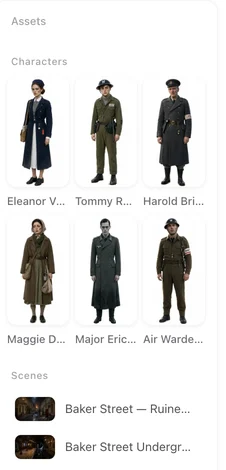
After the read, the summary, the cast descriptions and every storyboard are editable for free inside the project, so the story can still be sharpened. A story written anywhere else can be pasted in instead of generated; whether AI can write a story discusses what the writing side can and cannot do.
Limitations of story structure
- Structure is a tool, not a formula; plenty of good stories bend it.
- An outline cannot tell you whether the sentences will be good; only drafting can.
- SceneMixer adapts a story into episodes; it does not edit prose or format a manuscript for publishing.
- The adaptation figure comes from rule-based tags on a fixed set of public posts, not from a survey of writers; see the collection method.
FAQ
How to make a story people want to finish?
Make the want clear early, make every scene cost the character something, and end each scene with a question the next one answers.
How to create a story from one idea?
Turn the idea into a character with a want and an obstacle, then list three turns. In SceneMixer's AI Create, one line can be written into a full script you then read and edit.
How long should a short story be?
Long enough for one want, one obstacle and a change, and no longer. Many short stories cover a single situation or a single day.
Can I turn my story into a video?
Yes. Paste the story into SceneMixer; it is read into a cast, places and an episode outline, and each episode is storyboarded and generated.
Related: whether AI can write a story, creating a screenplay, four ways to start a project, what happens after the script is written, and the collection method behind the count.
Your story, cast and storyboarded
Paste a story or type one line, and SceneMixer reads it into characters, places and episodes.
Sign up freePer-second video rates are on the pricing page with the same numbers.