How to make an AI Ottoman palace drama
Brief for AI Create: An Ottoman palace drama: when the sultan falls ill, his mother and his grand vizier each quietly back a different son; a junior scribe who copies both sets of letters is the only one who knows; 8 short episodes, Turkish dialogue, every episode ends on a sealed letter.
The choices that make it Ottoman
| Step 1 setting | Choose | Why |
|---|---|---|
| Scene Style | Ottoman Palace | Istanbul palaces and mansions of the 16th to 19th centuries: tiled walls, low seating in layers, gilding. |
| Costume Style | Ottoman Court | The Topkapi court: robe over robe in gold brocade, tall turbans, jewels. |
| Visual Style | Digital HD, Shot on Film or Classical Oil Painting | Live action for a series feel; the oil-painting look if you want a miniature-painting richness. |
| Target Region | Middle East or Follow script | Middle East gives Turkish names and faces for a Turkish setting; Follow script keeps what your script says. |
| Dialogue language | Turkish | Spoken in Turkish as each clip renders. English lines work too. |
All of this is written into the scene and character descriptions when the script is read, so it is chosen first. Why they are fixed afterwards · Every scene and costume style.
Court, bazaar and Gulf robes are not the same thing
Several styles sound close and are not. Use the right one for each place and person:
- Ottoman Palace and Ottoman Court — the palace and the people who live in it.
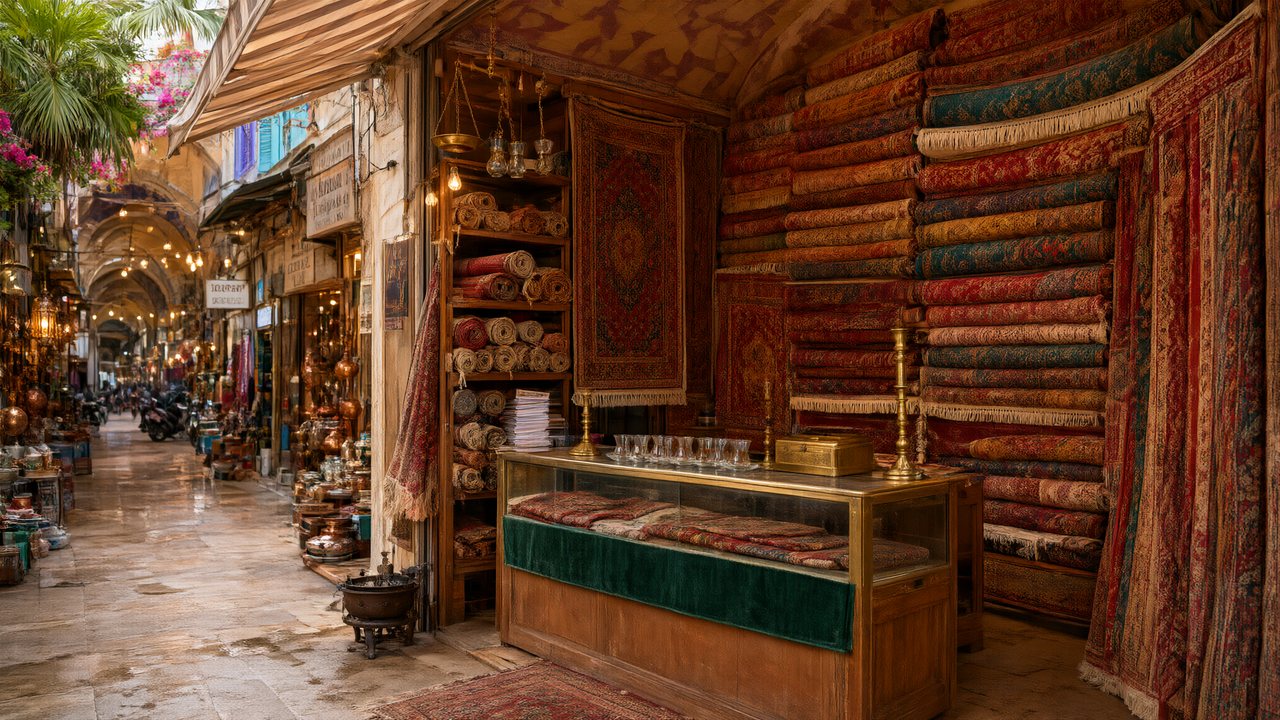
- Middle Eastern Souq — the old-city market lanes under vaults, for the street outside the palace wall.
- Middle Eastern Robes — the white and black robes of the Gulf Arab world, not Ottoman court dress.
- Persian Court and Indian Royal — other courts, for a visiting ambassador or a rival dynasty.
Titles and names
An Ottoman court is full of titles: the sultan, the queen mother, the grand vizier, agas, a chief physician. Tie each title to one person in the script the first time it appears (“Ibrahim, the Grand Vizier”). When the script is read, the character card keeps the other names your text uses for that person on its grey Also called line (read-only; there is nothing to type), so “the Grand Vizier” in a later episode is found as the same person. A title that could fit several people is not kept. Also called.
Invent your court. A fictional sultan with a fictional name is fine, and characters from a known series can trigger the IP check. If a clip is blocked.
Rooms and what each is for
| Room | The kind of scene |
|---|---|
| The council chamber | Viziers in a row, a petition, a decision announced. |
| The queen mother’s rooms | A conversation with a servant in the room and a plan under it. |
| A tiled courtyard | An ambassador kept waiting; two rivals who must greet each other. |
| The palace kitchens | A cup, a tray, a name written on a cloth. |
| The scribes’ room | A letter copied twice. |
Each place gets its own scene card in Step 2, and each segment stays in one place and one stretch of time. A segment stays in one place and one timeline.
Power without the violence
Palace stories end people by order, not by fight: an exile, a silk cord, a sealed room. The video checks stop graphic violence, and the genre does not need it.
- A death sentence: the decree read, the man bowing his head, the corridor emptying.
- A poisoning: the cup carried in, the cup carried out.
- The women’s quarters: a court of rivals, mothers and sisters, played as politics and family. Keep it free of anything sexual.
A council scene, shot by shot
| Beat | Shot to adapt |
|---|---|
| The chamber | [Shot 1] 4s: Wide shot, fixed camera. The imperial council chamber, tiled walls in blue and white, viziers seated in a row along the low divans. @Kerem, the sultan, sits raised at the far end, still and pale. |
| The vizier | [Shot 2] 3s: Medium shot on @Kemal, the grand vizier, rising with a sealed paper in both hands. |
| The line | [Shot 3] 4s: Close-up on @Kemal. @Kemal (measured, Turkish): Padişahım, divan toplandı. (voice: Kemal) |
| The scribe | [Shot 4] 3s: Close-up on @Selim, the young scribe by the door, whose hand has stopped moving on the page. |
| The silence | [Shot 5] 3s: Medium shot on the veiled lattice above the chamber. A figure behind it is standing very still. |
How to write one shot · Hooks and cliffhangers.
Story shapes that work
- The succession: an ailing ruler, two heirs, two backers, one court that must pretend nothing is wrong.
- The scribe who copies both sides: the smallest person in the room holds the largest secret.
- The ambassador: a foreign envoy, a gift, and a message hidden in how it is presented.
- The queen mother: power exercised in a single sentence to a servant.
- The physician: a cure that decides who rules.
Other palaces: Joseon palace drama · History drama · Period romance.
Make it in SceneMixer, start to finish
- Script: paste your own (Turkish or English) on Upload Script, or write the brief in AI Create.
- Step 1: Type Short Drama or TV Series; scene style Ottoman Palace; costume style Ottoman Court; a visual style; Target Region; Turkish dialogue; 9:16 Portrait or 16:9. Read the script.
- Step 2: a specific face, an age and the clothes of their office for each character. The first 15 setup images on an account are free.
- Storyboard: episode 1 first (free on your first project). One place per segment.
- Video: generate on the default tier at 10 credits a second; put the episodes together and post.
| Episode | The scene | The ending beat |
|---|---|---|
| 1 | The council meets without the sultan’s voice. | A sealed paper is not handed to the vizier. |
| 2 | The queen mother’s quiet instruction. | The servant bows and leaves with the wrong tray. |
| 3 | The scribes’ room. | The same hand wrote both letters. |
| 4 | An ambassador kept waiting in the courtyard. | The gift is opened and is empty. |
| 5 | The physician is summoned at night. | He refuses to say who sent for him. |
FAQ
How do I make an Ottoman palace drama with AI?
In Step 1 choose the scene style Ottoman Palace and the costume style Ottoman Court, set the dialogue language to Turkish, then write or generate the script and render episode by episode.
What does the Ottoman Palace scene style look like?
Istanbul palaces and mansions of the 16th to 19th centuries: blue-white and turquoise floral tiles, layered low seating and gilding.
Can the characters speak Turkish?
Yes. Turkish is one of the dialogue languages; choose it in Step 1 and the lines are spoken on screen. English lines work too.
Which Target Region should I pick?
Middle East gives Turkish names and faces for a Turkish setting. Follow script keeps whatever the script already says.
Is Middle Eastern Robes the right costume?
No. Those are the white and black robes of the Gulf Arab world. Ottoman court dress is the Ottoman Court style.
Can I show an execution or a poisoning?
Not the act. Show the decree, the cup and the empty corridor. The video checks stop graphic violence.
Can I use a real sultan or a famous series' character?
Use invented characters. Characters from known series can trigger the IP check, and an original sultan keeps the story yours.
Will the vizier look the same in every episode?
Yes. Each character is drawn once and that sheet is used in every shot.
Updated October 26, 2026