How to make an AI Joseon palace drama
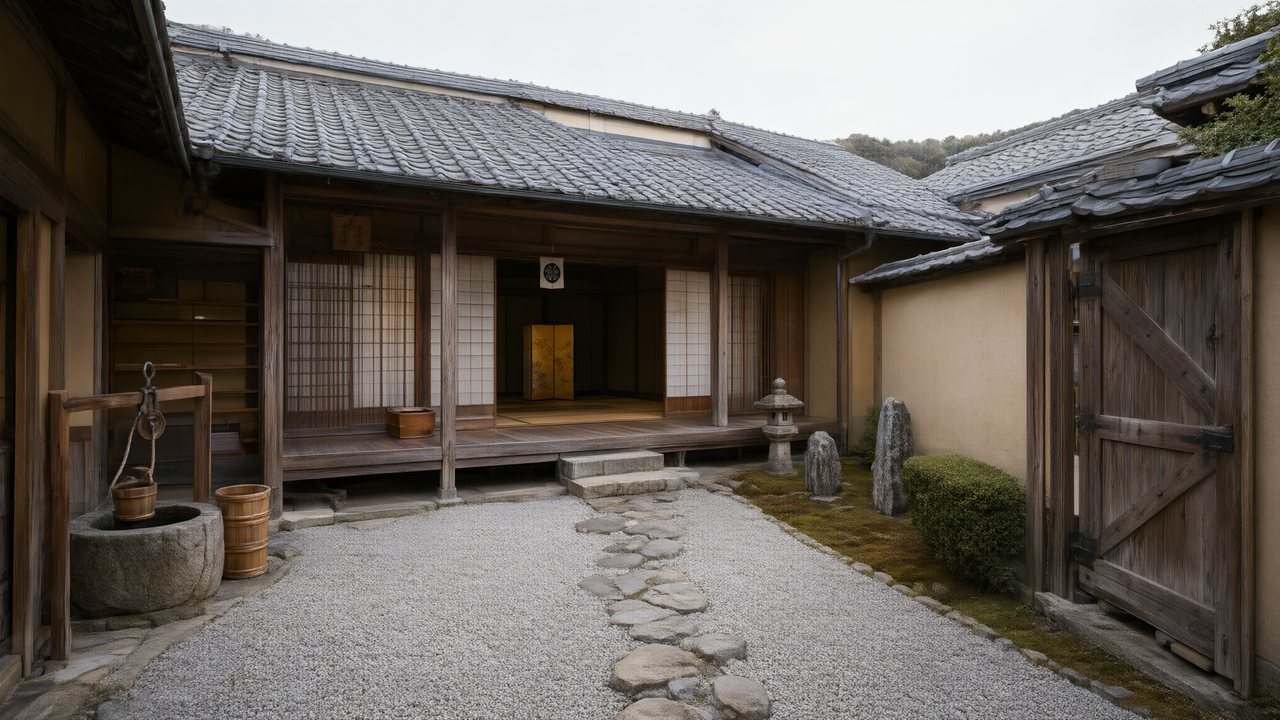
Brief for AI Create: A Joseon palace drama: a young court lady who serves tea to the queen mother notices the cup has been changed; she tells no one, and the crown prince, who has been avoiding her, is the only one who sees her notice; 8 short episodes, Korean dialogue, every episode ends on a closed door.
The choices that make it Joseon
| Step 1 setting | Choose | Why |
|---|---|---|
| Scene Style | Joseon Korea | Hanyang palaces and scholar houses: grey tile roofs with upturned eaves, painted beams, paper doors, stone terraces, a wide front courtyard. |
| Costume Style | Hanbok | Short jacket over a high-waist full skirt for women, wide robes for men, soft bright colours. |
| Visual Style | Shot on Film, Soft Glow or Digital HD | Live action with a film grade or a soft glow suits a court drama; Korean Webcomic or Watercolor Anime if you want a drawn look. |
| Target Region | East Asia or Follow script | East Asia gives a Korean cast and names; Follow script keeps exactly what your script says. |
| Dialogue language | Korean | The lines are spoken in Korean as each clip renders. English lines work too. |
These are read into the descriptions when the script is read, so choose them before that. Why they are fixed afterwards · Every scene and costume style.
Write rank into the clothes
Hanbok is the wardrobe; rank is what you add to each character’s clothing description in Step 2. A few forms that read clearly on screen:
- The king: a crimson robe with gold dragon roundels on the chest, shoulders and back, and a black court hat.
- A civil official: a round-collared robe with a crane badge on the chest and a black hat with a pair of wings at the sides. A military official wears a tiger on the badge.
- A court lady: a short jacket over a long full skirt in the colour of her office, hair in a low braided chignon with a pin.
- A scholar: a plain pale robe and a black horsehair hat with a brim.
A prince who walks the city in disguise is one character with a second look, not a second character: make the commoner’s clothes a state of the same sheet so the face never changes. Costume changes and scene states.
Court titles pile up — Your Majesty, a rank, a given name. Tie each title to its person in the script the first time it appears (“the Queen Mother, Lady Han”). When the script is read, the card keeps the other names your text uses for the same person on its grey Also called line (read-only; there is nothing to type), so a later “the Queen Mother” still finds her. Also called.
One room, one courtyard, one segment
Court drama is staged in a handful of places, and the system likes that: each segment happens in one place and one stretch of time. Give every place its own scene card in Step 2.
| Place | What the segment is for |
|---|---|
| The throne hall | Audiences, edicts, officials kneeling in two rows. |
| The queen mother’s quarters | Tea, quiet orders, someone being watched. |
| A garden pavilion | The meeting nobody is supposed to see. |
| The kitchen or the medicine office | Where the cup, the soup or the draught is made. |
| The back gate at night | Leaving, arriving, being followed. |
Moving from the hall to the garden is a new segment, not a cut inside one. A segment stays in one place and one timeline.
Intrigue without the gore
Poison, flogging and execution are the engine of palace plots, and the part the video checks will stop. Tell them the way the genre does: the cup before, the empty cup after.
- The poison: the bowl set down, the quiet look, the closed door; then the morning after.
- The punishment: the sentence read in the courtyard, the figure walked out of frame, the empty mat.
- The verdict: a faint sound off screen, a face turning away, a page of the edict dropped.
Invent your court. Characters from a known drama can trigger the IP check, and an original king with an original name keeps the story yours. If a clip is blocked.
A court scene, shot by shot
| Beat | Shot to adapt |
|---|---|
| The courtyard | [Shot 1] 4s: Wide shot, fixed camera. A palace courtyard at dusk, grey tile roofs and painted beams, lanterns being lit one by one. @Yeon-hwa crosses the stone terrace carrying a covered tray. |
| The door | [Shot 2] 3s: Medium shot. A court lady slides the paper door open for @Yeon-hwa without looking at her. |
| The tray | [Shot 3] 3s: Close-up on @Yeon-hwa’s hands setting the tray before @Dowager. The lid is lifted; steam rises. |
| The line | [Shot 4] 4s: Close-up on @Yeon-hwa, eyes lowered. @Yeon-hwa (steady, Korean): 전하, 탕약을 드시옵소서. (voice: Yeon-hwa) |
| The pause | [Shot 5] 3s: Close-up on the cup in front of @Dowager. She does not reach for it. The paper door behind her darkens as someone passes. |
How to write one shot · Hooks and cliffhangers.
Story shapes that work
- The court lady who saw it: she knows something; the question is who else knows she knows.
- The crown prince and the one he cannot choose: duty on one side of the courtyard, a person on the other.
- The royal physician: a cure that is also a weapon.
- The disguised royal: a prince among commoners, a clock ticking on how long it lasts.
- A succession in doubt: two heirs, one court, every episode a quiet vote.
The wider Korean drama picture, including modern stories, is in How to make an AI K-drama. For other palaces: Ottoman palace drama · Period romance.
Make it in SceneMixer, start to finish
- Script: paste your own (Korean or English) on Upload Script, or write the brief in AI Create.
- Step 1: Type Short Drama or TV Series; scene style Joseon Korea; costume style Hanbok; a visual style; Target Region; Korean dialogue; 9:16 Portrait or 16:9. Read the script.
- Step 2: give each character a specific face, an age and the clothes of their rank; add a second state for any disguise. The first 15 setup images on an account are free.
- Storyboard: episode 1 first (free on your first project). One place per segment.
- Video: generate on the default tier at 10 credits a second; put the episodes together and post.
| Episode | The scene | The ending beat |
|---|---|---|
| 1 | The queen mother’s tea. | The cup is not the one she brought. |
| 2 | The court lady says nothing. | The crown prince has been watching from the garden. |
| 3 | The medicine office. | Someone has copied the physician’s seal. |
| 4 | An audience in the throne hall. | The prince speaks for her, and regrets it at once. |
| 5 | The back gate at night. | A second lantern is lit behind her. |
FAQ
How do I make a Joseon-era palace drama with AI?
In Step 1 choose the scene style Joseon Korea and the costume style Hanbok, set the dialogue language to Korean, then write or generate the script and render episode by episode.
Which scene style should I use for a Korean palace?
Joseon Korea: palaces and scholar houses of Hanyang with grey tile roofs, painted beams, paper doors and stone terraces.
How do I show rank with hanbok?
Hanbok is the wardrobe. Write the rank into each character's clothing description: a king's crimson dragon-roundel robe, a civil official's crane badge, a court lady's jacket and skirt.
Can the characters speak Korean?
Yes. Choose Korean as the dialogue language in Step 1 and the lines are spoken in Korean on screen.
Can I show a poisoning or an execution?
Not the act itself. Show the moments before and after: the cup, the closed door, the empty mat. The video checks stop graphic violence.
Can I use a real Joseon king or a famous drama's character?
Use invented characters. Characters from known dramas can trigger the IP check, and an original king keeps the story yours.
How is this different from the K-drama guide?
The K-drama guide covers modern and Joseon stories in broad strokes. This one goes into the palace, rank in clothing and court intrigue.
Will the court lady look the same in every episode?
Yes. Each character is drawn once and that sheet is used in every shot. A disguise is a second look of the same character.
Updated October 26, 2026