How to make an AI watercolor storybook video

Brief for AI Create: A watercolor storybook for ages 3 to 6: a girl called Pim folds a paper boat after the rain and follows it down the lane, under the bridge and over the weir to a pond where the frogs are holding a party; a warm, slow narrator, twelve spreads, one soft line at the end.
Which watercolor look to choose
Two of the 21 visual styles are watercolor and a third is painterly. They are not the same, and the choice is fixed after Step 1:
| Visual Style | What the card says | Choose it for |
|---|---|---|
| Watercolor Storybook | Transparent watercolor and pencil, like a children's book | Bedtime stories, fables, ages 2 to 7, anything that should feel printed on paper |
| Watercolor Anime | Watercolor-on-paper look, fine lines, natural colors | Quiet slice-of-life, gentle fantasy, older children and adults |
| Painterly Anime | Lavish, saturated scenery; simple-lined characters | Big skies and scenery, a more emotional film |
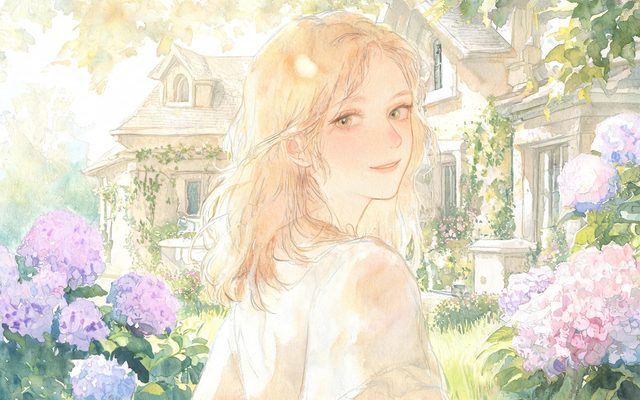
Visual Style: Watercolor Storybook
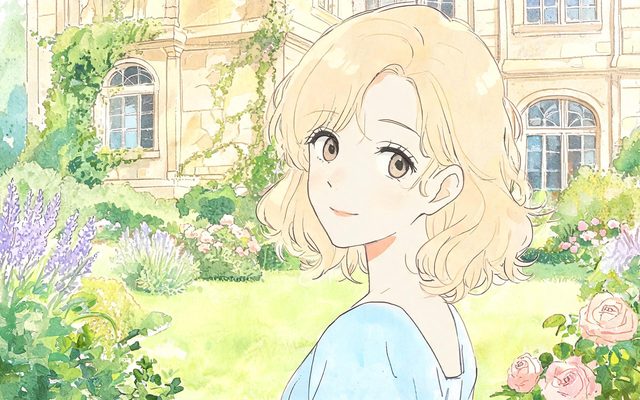
Visual Style: Watercolor Anime
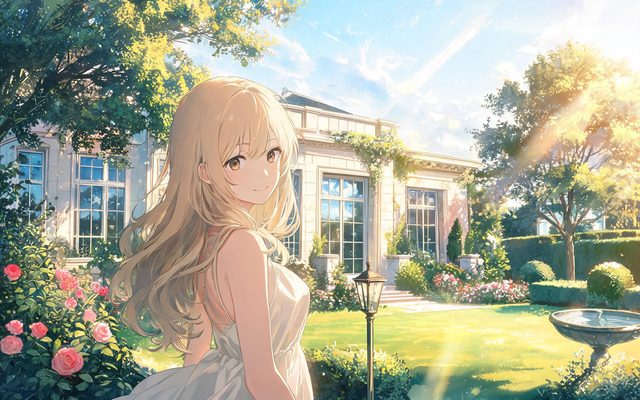
Visual Style: Painterly Anime
All 21 visual styles · Choosing the settings.
Think in spreads, not scenes
A printed picture book is read in spreads: two facing pages, one picture, a line or two of text, then a page turn. The same grammar works as video, and it keeps the cost down because each spread is one place.
| In the book | In the video | How to write it |
|---|---|---|
| A spread | One segment of up to 15 or 30 seconds in one place | Give the segment a single location |
| The picture | One to three shots | One subject per shot; hold the first wide shot for 4 to 5 seconds |
| The text on the page | A narrator line | One short sentence per shot, spoken by an Off-screen narrator |
| The page turn | The cut to the next segment | End a spread on an image, not on a line |
| The last page | The first picture again, changed | Return to the doorstep, now at night |
A twelve-spread story map
Twelve spreads of 15 seconds is a three-minute film. This is the map for the brief above: one place per spread, one narrator line each.
| Spread | Place | The picture | Narrator line |
|---|---|---|---|
| 1 | The doorstep | The rain stops; Pim folds a yellow paper boat | When the rain stopped, Pim folded a boat. |
| 2 | The gutter | The boat is set on a thin stream of rainwater | It was the smallest boat in the world. |
| 3 | The lane | The boat drifts past a blue door and a sleeping cat | It sailed past the blue door and the cat. |
| 4 | The bakery window | Steam on the glass, a baker asleep on a flour sack | The baker was dreaming of bread. |
| 5 | The stone bridge | The boat slips into the dark under the arch | Under the bridge, everything echoed. |
| 6 | Under the bridge | Reflections of the sky glitter on the water | Something glittered. It was only the puddle, wearing the sky. |
| 7 | The weir | A small waterfall; the boat tips at the edge | At the weir, the boat took a deep breath. |
| 8 | Below the weir | The boat lands upright in white foam | And landed on its feet. |
| 9 | The meadow stream | Lantern-lit lily pads, frogs in their best | The frogs were having a party. |
| 10 | The pond | The frogs gather around the boat | They had been waiting for a boat all night. |
| 11 | The pond | The smallest frog climbs in; the others cheer | The smallest frog became the captain. |
| 12 | Pim's window | Pim, back home, sees the pond glimmer far away | And Pim, who had folded it, fell asleep smiling. |
The first spread, shot by shot
Narrator lines are written into the shot as voice-over, and the shot is given enough seconds to say them: SceneMixer plans English speech at about three words a second plus a pause at each sentence end, so a shot with a line cannot be much shorter than the line. Voice-over lines · How to write one shot.
| Beat | Shot |
|---|---|
| The lane | [Shot 1] 5s: Wide shot, slow push-in. A wet cobbled lane in soft watercolor washes, a blue front door, puddles shining under a pale sky. @Narrator (voice-over, warm and slow): When the rain stopped, Pim folded a boat. Ambient: dripping eaves, a distant bird. |
| The folding | [Shot 2] 3s: Close-up. @Pim's small hands crease a yellow sheet of paper into a boat. No dialogue. Ambient: soft paper folds. |
| The boat | [Shot 3] 4s: Medium shot, low angle. The paper boat on a thin stream of rainwater in the gutter, a loose pencil outline around it, light glinting. @Narrator (voice-over): It was the smallest boat in the world. |
| The goodbye | [Shot 4] 3s: Wide shot. The boat drifts away down the lane, @Pim kneeling with her chin on her hands. Ambient: water trickling. |
That is 15 seconds, four shots and two narrator lines.
Write the picture, not the brush
- Name the light. Low sun after rain, lamplight on wet stone, a pale morning. Light is what a painted scene is made of.
- Give each place two or three colors. Put them in the location's description: grey-blue stone, one yellow door, green moss.
- One subject per shot. A picture book frame has one thing to look at.
- Hold the shots. 4 to 6 seconds, slow push-ins, no whip pans; the look suits stillness.
- Do not repeat the style in every shot. The look is set once for the whole project, so spend the words on light, place and action. Why magic words do not help.
Voice, music and subtitles
The narrator is an Off-screen character: it gets a voice and no drawing. Play the voices in the library before you choose one and keep it for every episode. How character voices work. The built-in score is mixed in under the voices and a Music switch turns it off. Background music. Accounts that have made a purchase can add read-along subtitles or an SRT file. Add subtitles.
Picture book to video · AI kids story video generator · A bedtime story series · Fairy tale videos.
Make it in SceneMixer, start to finish
- Script: paste your own on Upload Script, or write the brief above in AI Create and let it draft the episodes.
- Step 1: Type Film; Scene Style Pastoral Healing; Costume Style Soft Everyday; Visual Style Watercolor Storybook; Target Region; dialogue language; 16:9 Landscape. Then read the script.
- Step 2: Draw Pim, the baker and the frogs as the cast and the lane, the bridge and the pond as locations; the narrator is an Off-screen character with a voice and no drawing. The first 15 setup images on an account are free.
- Storyboard: generate episode 1 first (free on your first drama) and read it before you render anything. One place per segment.
- Video: render on the default tier at 10 credits a second, fix single shots instead of whole episodes, then put the episode together and post.
| Length | Spreads of 15 s | Spreads of 30 s | Usually |
|---|---|---|---|
| 1 minute | 4 | 2 | A single rhyme or a bedtime moment |
| 2 minutes | 8 | 4 | A short picture book |
| 3 minutes | 12 | 6 | A full picture book |
| 5 minutes | 20 | 10 | A longer story or a chapter |
FAQ
How do I make a watercolor storybook video with AI?
Choose Watercolor Storybook as the Visual Style in Step 1, write the story as spreads of one to three shots, add an off-screen narrator, draw the cast once, then render and join the segments.
Which style is the picture-book look?
Watercolor Storybook: transparent watercolor and pencil, like a children's book. Watercolor Anime is a finer-lined, more natural-colored watercolor look for older audiences.
Can I change the look after I start?
No. The visual style is fixed once you continue past Step 1. Start a new project to try another look.
Can it read the story aloud?
Yes. The narrator is an off-screen character with a voice you pick from the library; its lines are spoken in the video.
How long should a watercolor storybook video be?
One to five minutes. A three-minute film is twelve spreads of 15 seconds.
Can I turn my own picture book into a video?
Paste the text as the script. Members can upload their own illustrations as reference sheets so the characters match the book.
Can I add subtitles for early readers?
Yes, on accounts that have made at least one purchase: burned-in captions or an SRT file.
How much does it cost?
Video is 10 credits a second on the default tier plus 1 credit a second to join. The first 15 setup images, the first storyboard on your first drama and a 5-second preview are free.
Draw the cast, read the free storyboard
Twelve spreads, one narrator, one look.
Updated November 2, 2026