Answers · Comics
How to Make Comics With AI?
Published November 18, 2026

The drawing is not the hard part
Image models can draw a striking panel from one sentence. A comic needs forty panels that agree with each other. A thread in r/aicomicmakers put the real problem plainly:
the annoying stuff is keeping the same character, making different camera angles work, keeping clothes/hair consistent
That is the most asked question in AI visual storytelling: about 1,000 posts in the community corpus ask how to keep a character looking the same. Comics make it harder than video, because a reader can flip back and compare.
How to make AI comics that hold together
Script before pictures. Write the pages as panels: what is seen, who speaks, what the caption says. A comic that is improvised panel by panel drifts, because every image is a fresh guess.
A model sheet for every character. Draw each character once, front and side, with the outfit and one unmistakable detail, and feed that sheet into every panel the character appears in. Name the detail in every prompt; models forget scars and earrings first.
Few angles, chosen on purpose. A wide shot to set the place, a medium shot for conversation, a close-up for the moment that matters. Unusual angles are where faces break.
Letter it yourself. Speech balloons and captions are typography, not illustration. Generate the art without text and add the lettering in a layout tool, where you can fix a typo without redrawing a face.
How to make manga using AI, and where SceneMixer fits
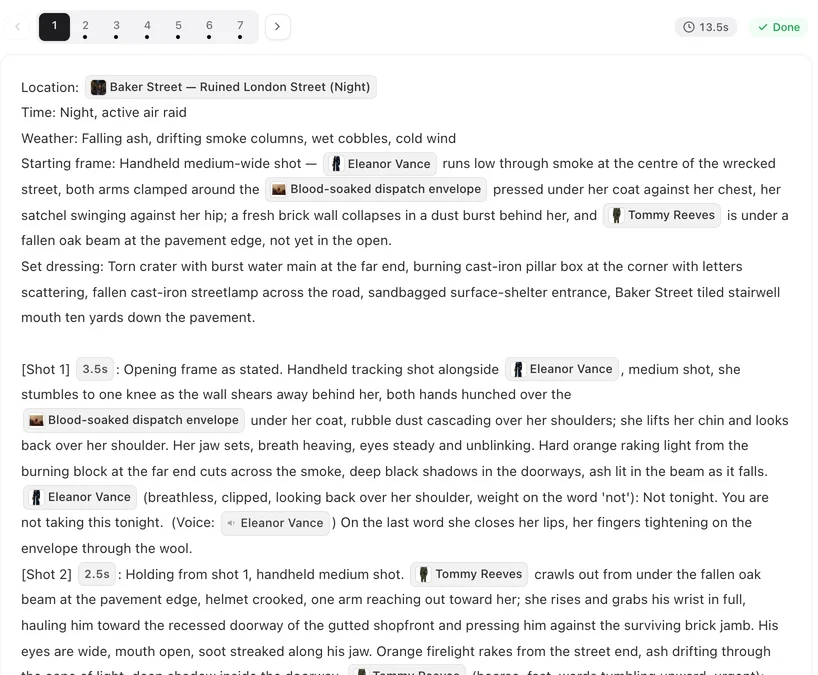
Manga is the same process with a different look: pick the style once and keep it, and plan for black-and-white tones if you print. SceneMixer is honest about its part. It does not produce comic pages, panel layouts or speech balloons. What it does is the step a comic script is already close to: it reads the script into characters drawn once as reference sheets, writes a storyboard of shots, and renders those shots as an animated episode, in an anime or any other look, with the lines spoken in the clip. Some creators make both: the comic for readers, and an animated episode of the same story for video platforms.
If you already have a finished comic or webtoon and want it to move, that is an adaptation: the text is read the same way as a script and the panels are redrawn as new shots. Use only material you have the right to adapt.
A first short comic, step by step
Start smaller than you think: four pages, one location, two characters. Write the pages as panel descriptions with the dialogue underneath, the way a comic writer hands a script to an artist. Design the two characters first and keep those images as the reference for everything after. Draw the establishing panel of each page before the close-ups, so the room is decided before faces are placed in it. Read the pages in order without the text, and redraw any panel where you have to stop and work out who is who. Only then letter the balloons, keeping each one under twenty words so it fits without crowding the art. When the four pages read cleanly, the method scales: a longer story is the same steps repeated, with the same model sheets and the same few angles.
Limitations of making comics with AI
- Panel-to-panel consistency still takes checking and rerolling; no tool gets every face right first time.
- Hands, small props and text inside images remain weak spots; letter in a layout tool.
- SceneMixer makes video, not comic pages; for a printed comic you need an image tool and a layout tool.
- Use characters and stories you have the right to adapt.
- The consistency-question count is a rule-based match over a fixed window of public posts.
FAQ
How to make AI manga?
Write the chapter as panels, design each character once in a manga style, generate panels against those designs and letter them in a layout tool. SceneMixer can turn the same script into an animated anime-style episode.
How to make manga with AI for free?
Image and layout tools differ in what their free tiers cover, so check each one. For an animated version, SceneMixer's first setup images and first storyboard are free.
Can SceneMixer make a comic book?
No. It makes storyboards and animated episodes, not comic pages or speech balloons. Use it when you want the story to move and speak.
How do I keep my comic character consistent with AI?
Draw one model sheet per character, reuse it in every panel and repeat the character's distinguishing detail in every prompt.
Can AI generated comics become a video?
Yes. Paste the comic's script or panel text into SceneMixer and each panel becomes a shot, with the same drawn cast and the lines spoken.
Related: making an anime with AI, turning a manga or webtoon into an anime series, comic to video, how to write one shot, and the collection method behind the count.
Turn your comic script into an episode
Paste the script, draw the cast once, and watch the panels move with the lines spoken.
Sign up freePer-second video rates are on the pricing page with the same numbers.