What Is a World Model? And Why Short Drama Needs One

Drag the frame in Try the demo set below to look around a set built this way. In your own project the same view appears in the editor’s preview while a segment renders.
A world model, in one paragraph
Most AI video models paint the next frames from what is already on screen. Nothing in them remembers what is behind the camera. Ask for a reverse shot and the model has to invent the other side of the room, and it invents a new one every time. A world model keeps a running picture of the place itself: the layout, the objects, who is standing where. Each new view is drawn from that picture, so views agree.
A film crew does the same thing without calling it anything. They build the set once, put the actors on their marks, and move the camera. The room does not change between takes because it is a real room. A world model is the AI version of having a set.
Why everyone is talking about world models in 2026
As of October 2026, three projects show where the idea is going:
- Genie 3, from Google DeepMind. You describe a place and it generates a world you can move through in real time, frame by frame, as you steer. In January 2026 Google opened Project Genie, a research prototype built on it, to Google AI Ultra subscribers.
- Marble, from World Labs. The company co-founded by Fei-Fei Li turns text, images or video into a 3D world you can walk around and export. Version 1.1 came out in April 2026.
- Helix World. A preview released in October 2026 by Noiz AI with the Hong Kong University of Science and Technology: a world model that generates picture and sound together, in real time.
The open problems are the same ones short-drama makers already know. Faces and clothes drift over a long take. Things change when the camera looks away and back. Worlds hold together for a minute or so, not for an episode. And the phrase itself is used loosely: some products that call themselves world models are still drawing shot by shot.
What a short drama needs from a world
A drama does not need a world you can wander for an hour. It needs one room that holds still for the length of a conversation, and comes back the same in the next episode.
- Shot and reverse shot agree. If she sits with the window behind her, his reverse shot shows the other side of the room, not a fresh wall.
- People keep their places. Whoever sat at the head of the table is still there after the cut.
- The room survives the episode break. The office in episode 1 is the same office in episode 6.
- Cameras make sense. An over-the-shoulder shot is taken from behind a real shoulder, at a real distance.
That is a much smaller job than an explorable world, and that is why it can be done reliably for every scene today. More on the craft side of this: Why characters swap sides between cuts.
How SceneMixer builds a world for each scene
- The scene image you already have for the location is the starting point.
- A 360° view of the set is made from it, so the room exists all the way round, not only in the direction the image faced.
- The room is measured: walls, ceiling, doors and window openings, and where the furniture stands.
- Every character in the scene gets a place in that room, from what the storyboard says: at the table, by the door, in the passenger seat.
- Every shot’s camera is placed inside the same world, so the wide shot, the close-ups and the reverse all look into one room.
Outdoor scenes get a lighter world: the ground, the objects close by, and the distant view in four directions. A room is measured once and reused across shots and across episodes. How the scene image turns into a set, and how to get a good one: Your scene image becomes the set.
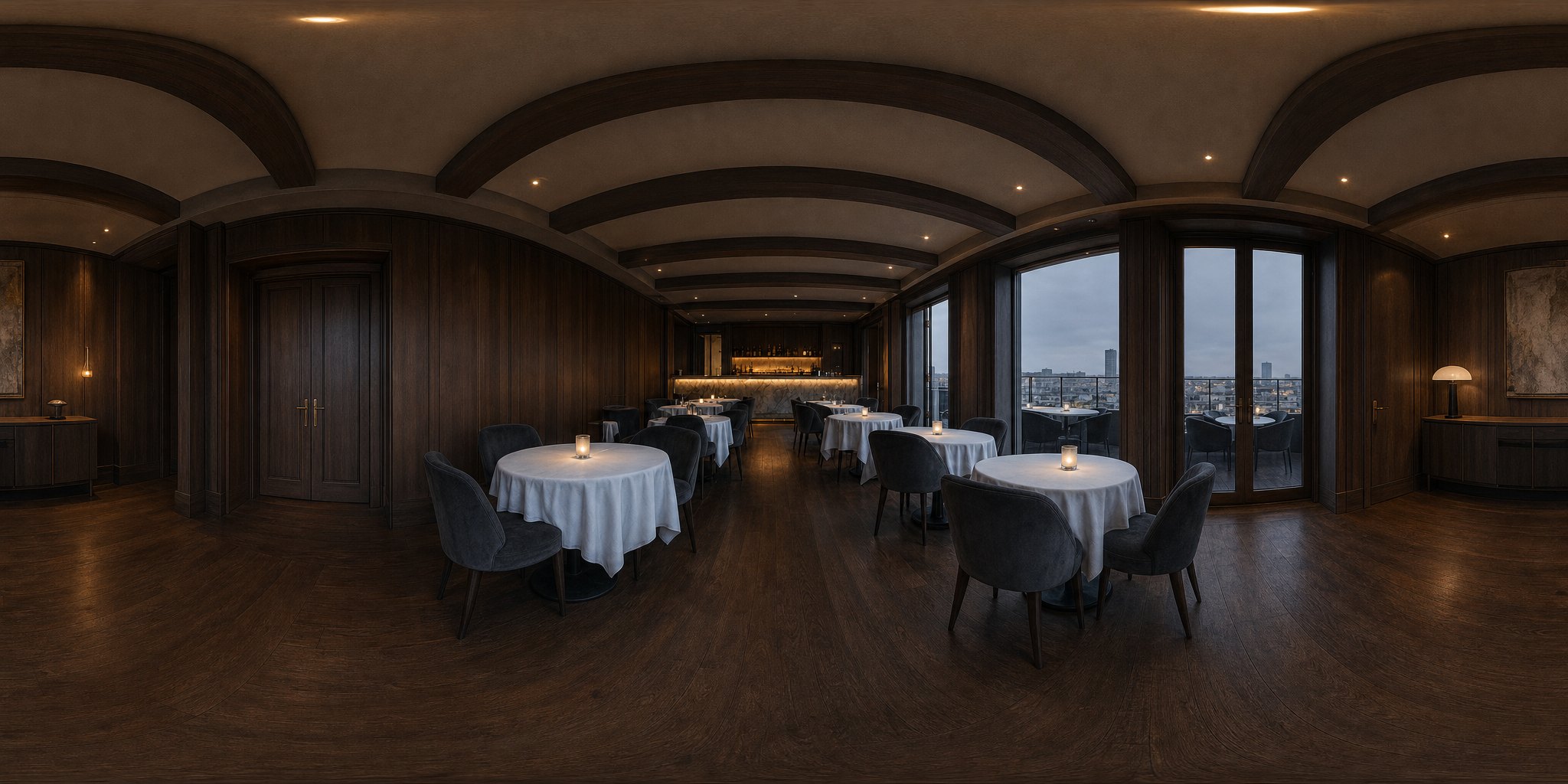
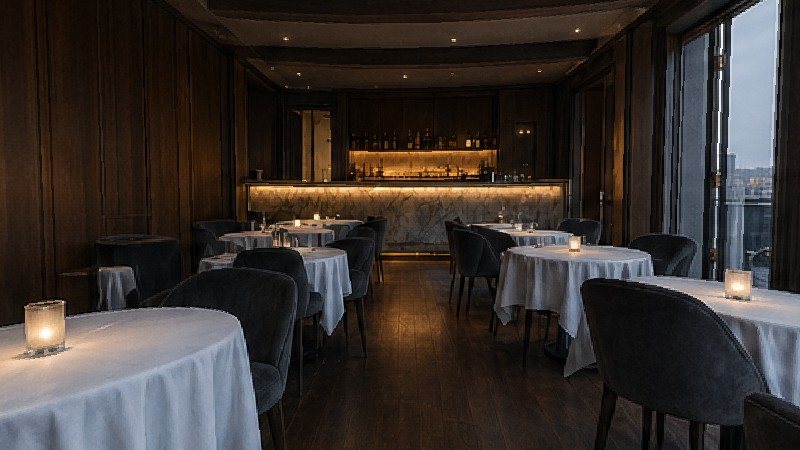
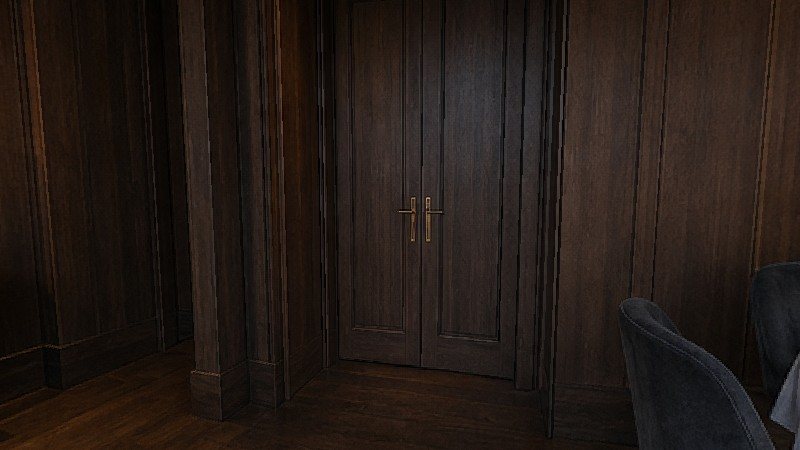
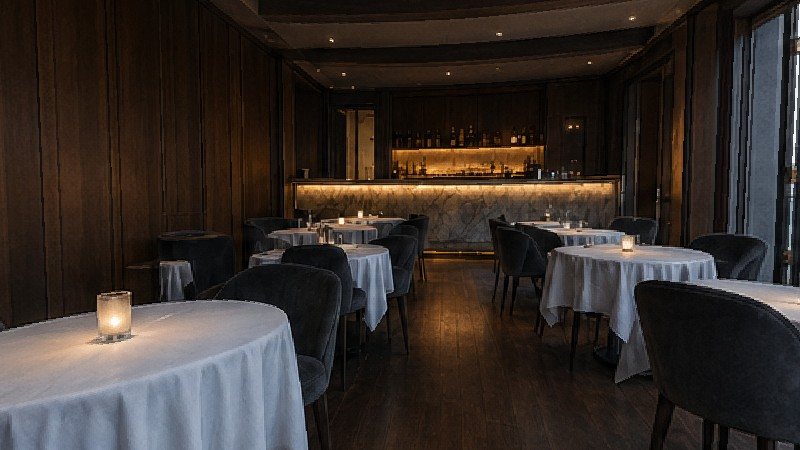
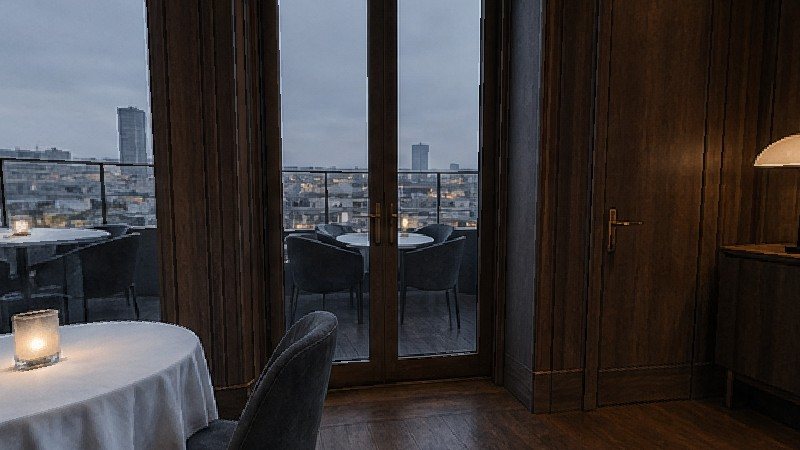
Try the demo set
This is the demo set from the SceneMixer homepage: a restaurant dining room with four characters and four cameras. Drag to look around; the view moves from camera to camera along the timeline at the bottom.
In a real project the editor shows your own set this way while a segment is being generated. What every part of it means: Look around the set while a shot renders.
Who gets it, and what it costs
The world model runs automatically on new projects on paid plans. There is no switch to turn on and no extra credits per shot; you pay for images and video exactly as before. What a paid plan changes.
Projects created before the world model launched, and projects on the free plan, keep the earlier automatic staging, which also holds seats and sides across cuts from the storyboard: Everyone stays where they sat.
What it does not do
- It is not a game. You can look around the set while a shot renders, and step a little on some sets, but you cannot walk the world freely or play in it.
- You do not move people by dragging. The view is read-only. Positions come from the storyboard; change the text to change them. Write positions the world can read.
- It does not set faces. Faces come from character images. Same face in every shot.
- It does not make every clip perfect. The video is still generated, shot by shot, inside the world. When one shot comes out wrong, edit and regenerate that shot: Edit one shot and regenerate.
| Question | Each shot drawn from scratch | With a world for the scene |
|---|---|---|
| Where is the door in shot 3? | Wherever that shot imagines it | Where it was in shot 1 |
| Who sits on the left? | Can flip at the cut | The same person, every cut |
| What does the reverse shot show? | A newly invented wall | The other side of the same room |
| The same office in episode 6? | Similar, not the same | The same measured room |
| What you set up | Nothing, and nothing holds | Nothing: on for new projects on paid plans |
FAQ
What is a world model, in simple terms?
An AI system that keeps track of a place (its layout, its objects, who is where) and draws each new view from that, so views agree. A video model without one invents the room again in every shot.
Is SceneMixer’s world model the same thing as Genie 3 or Marble?
No. Those build worlds you can explore. SceneMixer builds a set for each scene of your drama, measures it, places the characters and the cameras in it, and generates the shots from there. Same idea, much narrower job.
Can I walk around my world?
You can look around it. While a segment renders, the editor’s preview shows the set in 360° and you can drag, tilt your phone, and on some sets take a small step. You cannot walk it freely, and nothing you do there changes the video.
Does the world model cost extra?
No. It runs on new projects on paid plans with no extra credits per shot. Images and video are charged as before.
Why doesn’t my project have it?
Projects created before it launched and projects on the free plan keep the earlier automatic staging. Sample projects and segments that are already finished do not show the 360° view either.
Do I have to set anything up?
No. There is no switch. Write the storyboard as you normally would; the world is built from the scene image and the people are placed from the storyboard text.
Does it stop my character’s face from changing?
No. The world holds the room and the positions. Faces come from each character’s image; that has its own checklist.
Is the same world used in the next episode?
Yes. A room is measured once and reused across shots and episodes. If you make a new image for that scene, the room is measured again from the new image.
Can I export the world or use it somewhere else?
No. The world exists to shoot your drama inside SceneMixer. There is no export.
Build the set. Then shoot.
Start a new project and every scene gets a world before it gets a camera.
Updated October 15, 2026
Pricing·Novel to Video·Guides·Samples·Alternatives·Answers·Support·Privacy·Terms·Legal·Contact·Affiliate program·© 2026 SceneMixer