Everyone Stays Where They Sat
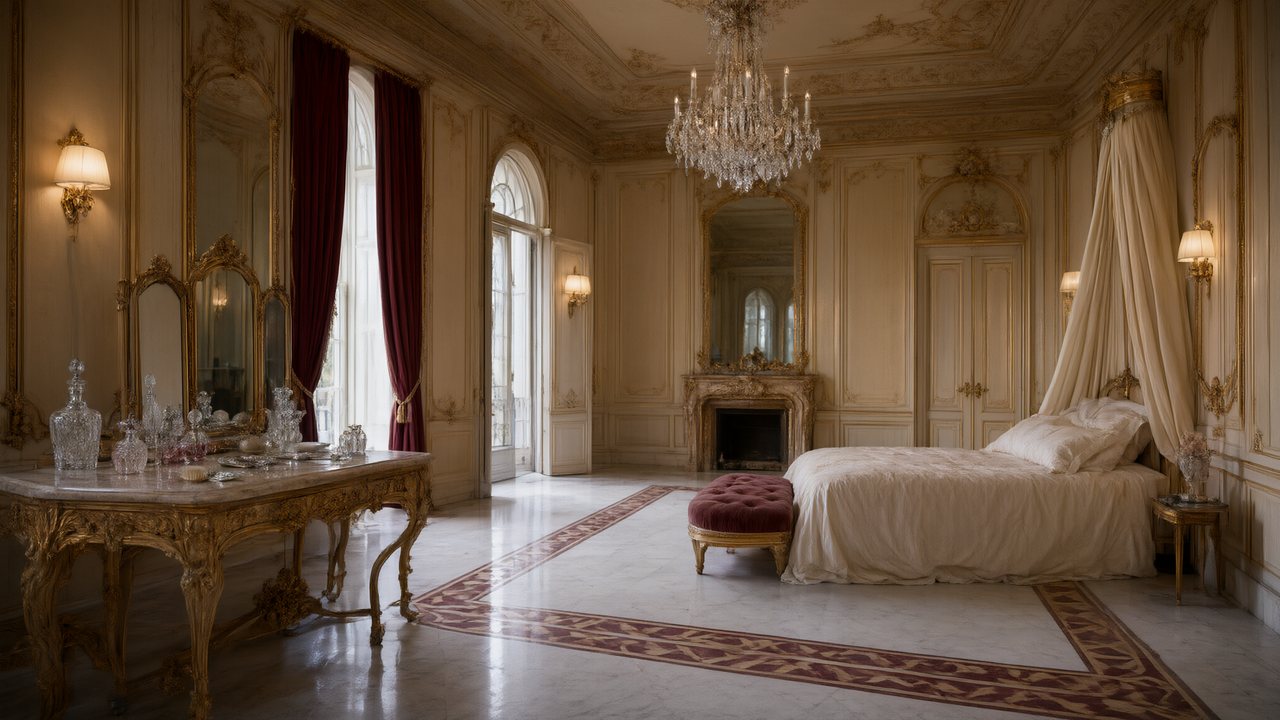
Open a finished episode, find a scene with two or more people at a table or in a car, and watch the cuts between them.
The problem this solves
A conversation is three or four shots: her, him, the two of them, her again. In a real room those shots agree with each other. She is on the left of the table in the wide shot, so in her close-up the window is behind her, and when we cut to him the door is on his side. That agreement is what makes cuts invisible.
Generated shot by shot with nothing holding them together, those four shots each invent their own room. The viewer feels it before they can say what is wrong.
What SceneMixer does about it
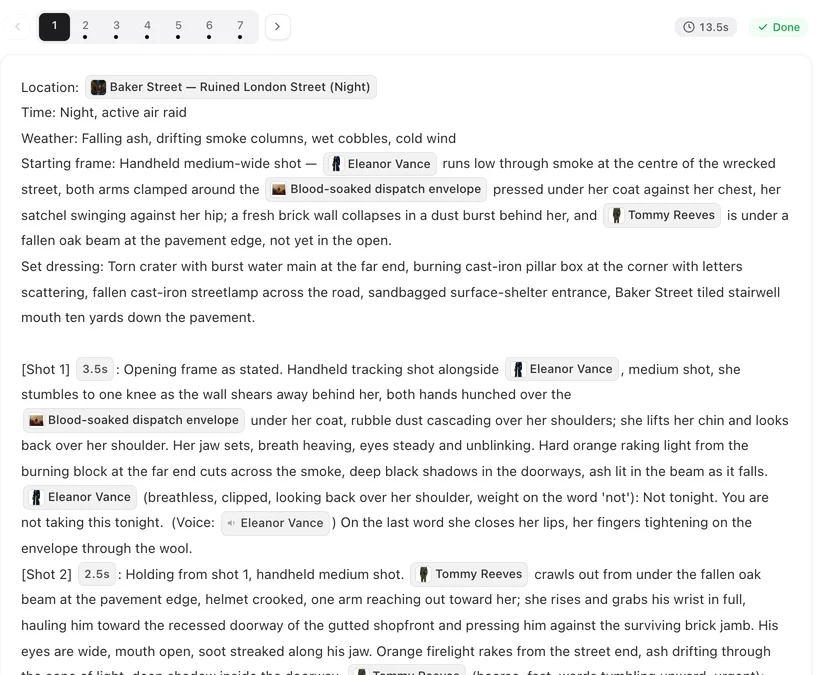
For every scene, SceneMixer builds an automatic AI 3D model: the space, the furniture that matters (the table, the bed, the front seats of the car), and a place for each character who is present. Every shot in the scene is then generated against that one model. The wide shot, the close-ups and the reverse shot all describe the same room from different positions.
You never see the model and you never touch it. It is built from the storyboard you already have and from the scene’s image.
What holds across cuts
Seats and positions. Whoever sat at the head of the table is still there in the next shot. The person in the passenger seat does not migrate to the back.
Walls, windows, doors. The window that was behind her stays behind her. A reverse shot shows what is actually on the other side of the room, not a new room.
Who is next to whom. Left and right stay left and right. When the storyboard says she faces him, the camera is placed where that is true.
Who is in the picture. A shot framed on two people shows those two, and the person standing behind them appears where she would really appear — or not at all if she is out of frame.
What it means for how you write
Write the storyboard the way you would describe a real room. “Mara sits at the head of the table, Jules on her right.” “The door is behind him.” Those sentences are read, and the staging follows them. Where you say nothing, the scene is laid out sensibly for you and kept that way.
You do not have to write camera positions. If you do — “over her shoulder”, “from the passenger window” — they are honoured where the room allows it. How to write one shot.
Where it applies
Rooms, vehicles, tables, corridors, stairwells, halls: any scene where people have positions. Wide outdoor spaces with people walking freely get less from it, because there is less to hold. It is on for every project; there is no switch and no extra cost.
| Without a shared model | With SceneMixer’s automatic AI 3D staging |
|---|---|
| Characters swap sides between cuts | Left stays left, right stays right |
| The reverse shot invents a new wall | The reverse shot shows the real other side of the room |
| Someone at the table vanishes or doubles | Everyone present stays present, in their seat |
| A car scene: driver and passenger trade places | Driver drives, passenger rides, back seat stays back |
| Every shot needs its own description of the room | You describe the room once; the shots agree |
FAQ
Do I have to set up the 3D scene myself?
No. It is built automatically from your storyboard and the scene image. You never see or edit it.
Does this cost extra credits?
No. It is part of generating a shot.
Can I control where people sit?
Yes, by writing it in the storyboard: who is at the head of the table, who is on whose right, who is in the passenger seat. The staging follows what you write.
Does it work outdoors?
It works anywhere people have positions relative to each other and to fixed things. A crowded street with people moving freely gives it less to hold on to than a kitchen or a car.
What if a shot still comes out with someone on the wrong side?
Regenerate that segment. Check that the storyboard names everyone in the shot and does not contradict itself about who is where.
Put two people at a table
Write the conversation, generate the scene, and watch the cuts hold.
Updated September 26, 2026
Pricing·Novel to Video·Guides·Samples·Support·Privacy·Terms·Legal·Contact·© 2026 SceneMixer