Why Characters Swap Sides Between Cuts

Open a finished episode, find two people talking, and watch three cuts in a row. Check one thing only: is each person on the same side of the frame every time they appear?
The 180-degree rule in two minutes
Draw a line through the two people in a conversation. Film crews call it the axis, or the line of action. Put the camera anywhere on one side of it: a wide shot, over his shoulder, over hers, a close-up of either. In every one of those shots she is on the left and looks right, he is on the right and looks left. Their eyes meet across the cut.
Now put one camera on the other side. In that shot she is suddenly on the right, looking right, and so is he. The viewer reads it as the two of them swapping seats, or as both of them looking at someone else. They cannot say what is wrong, but they feel the jump.
Why AI video breaks it
- Each shot is drawn on its own. “Close-up of Leo, angry” says nothing about which side of the frame Leo is on or which way he looks. The model picks, and it can pick differently every shot.
- The reverse shot invents a room. Behind him there should be the other side of the room she is facing. Drawn alone, it is whatever wall seems plausible: the window moves, a door appears.
- Eyelines drift. If she looks slightly left and he also looks slightly left, they are no longer looking at each other.
- Walking direction flips. Someone leaves frame on the right and enters the next shot from the right, walking back the way they came.
Writing “she is on the left” into every shot helps a little, but text is a weak way to hold geometry. The fix is to give the shots a shared space.
How a world keeps sides
On projects with the world model, each scene gets a world before it gets a camera: a 360° view of the set, the room measured, and a place for every character. Then the cameras for that scene are placed inside the same room. A reverse shot is a camera turned to look at him, so it shows what is really behind him; who is on the left follows from where the camera stands, not from a coin toss. Eyelines and distances follow from the positions too.
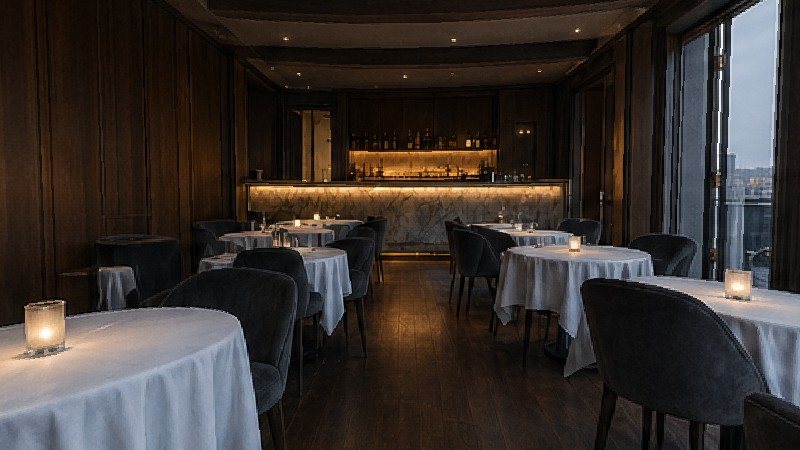
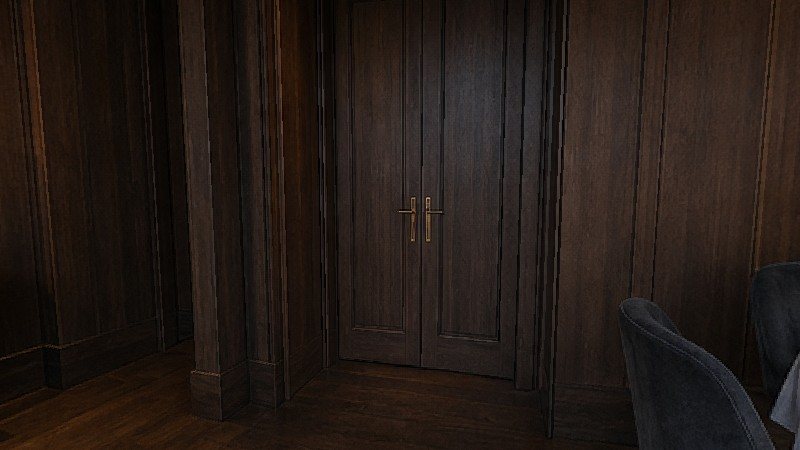
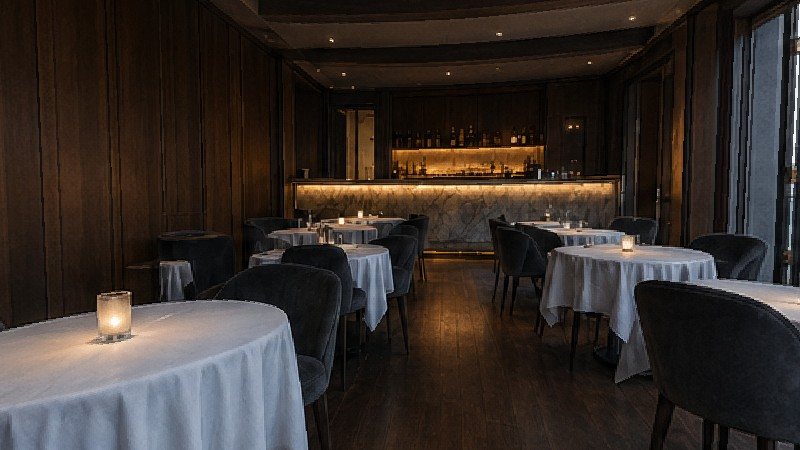
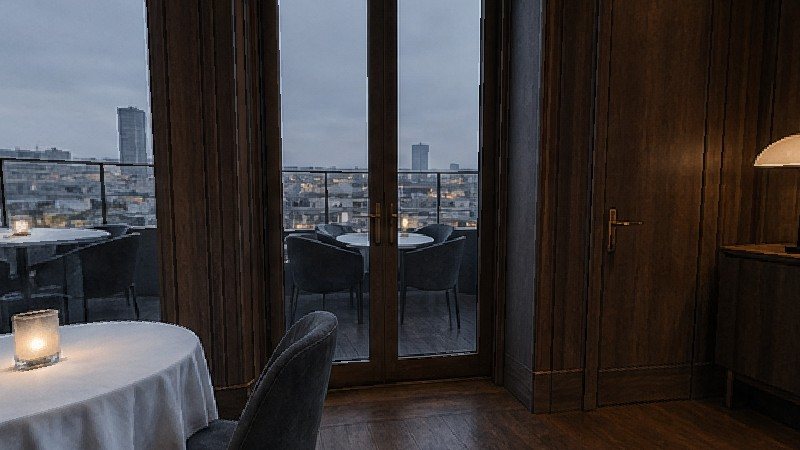
More on what the world is: What is a world model in AI video? Projects without it use the earlier automatic staging, which also places people from the storyboard: Everyone stays where they sat.
Write the conversation so it can be staged
You do not have to write camera positions. You do have to say where people are and who faces whom, once, early in the segment. Then each shot can just name its framing:
- Opening: Wide shot. @Mia sits at the round table by the window; @Leo sits across from her, his back to the bar.
- Cut to over @Leo’s shoulder, medium close-up on @Mia. She slides the envelope across.
- Cut to the reverse: over @Mia’s shoulder on @Leo. He does not touch it.
- Cut to close-up, in frame only: @Mia. She waits.
“Across from her” and “his back to the bar” are what put the two of them on opposite sides of the line with the room behind each. The full shot format: How to write one shot. A phrasebook of positions: Write positions the world can read.
When crossing the line is fine
- The camera moves across, on screen. A shot where the camera circles behind her takes the viewer with it. Write the move: “the camera circles round behind @Mia”.
- A new wide shot. A fresh wide shot of the room resets the viewer’s map; after it, a new line can apply.
- Someone moves. If he stands and walks to the window, the line now runs between her and the window. Write the walk so the new position is clear.
Breaking the rule on purpose is a choice; breaking it at random is a glitch. The difference is whether the viewer saw how the camera or the person got there.
If sides still swap
- Are both people named? Everyone visible should be an @ chip in the shot. Who is in frame.
- Does the text say who faces whom? “Across from”, “beside”, “behind” place people; “they talk” does not.
- Are both segments in the same location? Two segments set in two different scenes are two different rooms.
- Does the project have the world model? New projects on paid plans do; older and free projects use the earlier staging.
- Is it one shot? Regenerate just that shot: Edit one shot and regenerate.
| Shot | Where the camera is | What the viewer should see |
|---|---|---|
| Wide | To one side, far enough to hold both | Her on the left, him on the right, the room around them |
| Over his shoulder | Behind him, same side of the line | Her face, his shoulder on the right edge |
| Reverse, over her shoulder | Behind her, same side of the line | His face, her shoulder on the left edge, the room behind him |
| Close-up | Near the over-the-shoulder spot | One face, looking off the same way as in the wider shot |
| Insert | Anywhere near the object | The envelope on the table; sides do not matter |
FAQ
What is the 180-degree rule?
Draw a line between two people in a scene and keep every camera on one side of it. Then each person stays on the same side of the frame and their eyes meet across the cut.
Why do characters switch sides in AI videos?
Because each shot is usually generated on its own, and the text of a shot rarely says which side of the frame each person is on. The model picks, and can pick differently every time.
Does SceneMixer follow the 180-degree rule?
On projects with the world model, the cameras for a scene are placed in one measured room where everyone has a place, so a conversation is planned with people keeping their sides. You can still ask for a camera move that crosses.
Do I have to write where the camera goes?
No. Say where people are and who faces whom. If you do name an angle, such as over her shoulder or from the doorway, it is followed where the room allows.
Can I break the rule on purpose?
Yes. Write the move that takes the viewer across: the camera circling behind someone, a new wide shot, or a character walking to a new spot.
Why did the window move between shots?
Without a shared room, each shot invents its own background. With the world model the room is the same for every shot in the scene; if one shot still drifts, regenerate that shot.
What about people walking?
Keep the direction consistent: someone who leaves frame on the right should come in from the left in the next shot. Name the destination, like walks to the door, so it stays in the same place.
Keep everyone on their side
Start a project and every scene gets one room, with every camera placed inside it.
Updated October 15, 2026
Pricing·Novel to Video·Guides·Samples·Alternatives·Answers·Support·Privacy·Terms·Legal·Contact·Affiliate program·© 2026 SceneMixer