How to Make an AI Fruit Drama

Brief for AI Create: A fruit soap opera: in a villa by the sea, Strawberry falls for Mango on the first night, but Mango's ex, Pineapple, arrives on day three with a secret; the Banana host announces a recoupling; Strawberry has to choose; dramatic, petty, very serious.
Two formats that work
- The villa dating show. Fruit arrive at a villa, pair off, get tested, recouple. Every episode has an arrival, a betrayal or a vote. The confessional — one fruit on a sofa talking to camera about the others — is half the comedy.
- The kitchen soap opera. A fruit-bowl family, a forbidden romance, a rival from the next bowl. Played as straight melodrama, with slaps that stop before contact and dramatic zooms on a gasp.
Both run on the same rule as any short drama: a hook in the first seconds, one conflict per scene, a cliffhanger at the end. Hooks and cliffhangers.
Settings to pick in step 1
- Visual Style: 3D Toy Cartoon for the glossy, bright look most fruit dramas use; Feature 3D Animation for a softer, family-film one; 2D Cel Shading for a flat cartoon. Live action is the wrong choice: a fruit with a face is a cartoon by definition.
- Scene Style: Island Resort for the villa and the pool, Suburban Mansion for a family soap, Soft Romance for a sweet one.
- Type and Aspect Ratio: Short Drama and 9:16 Portrait — this is a feed format.
- Costume Style: optional. Fruit wear what you write on their cards; a project-wide style is not needed.

Visual Style: 3D Toy Cartoon
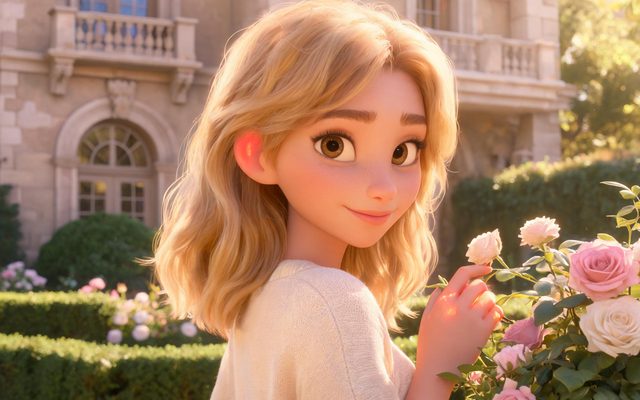
Visual Style: Feature 3D Animation

Visual Style: 2D Cel Shading
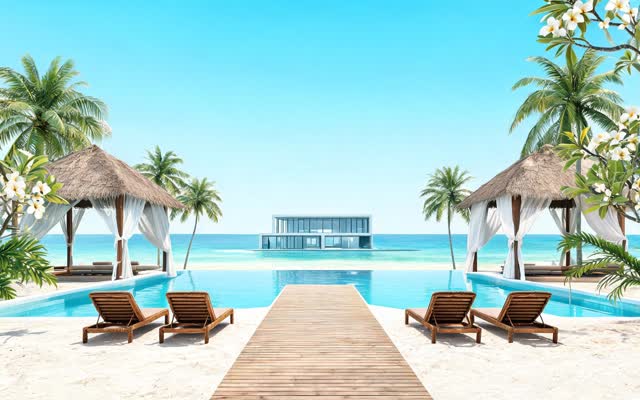
Scene Style: Island Resort
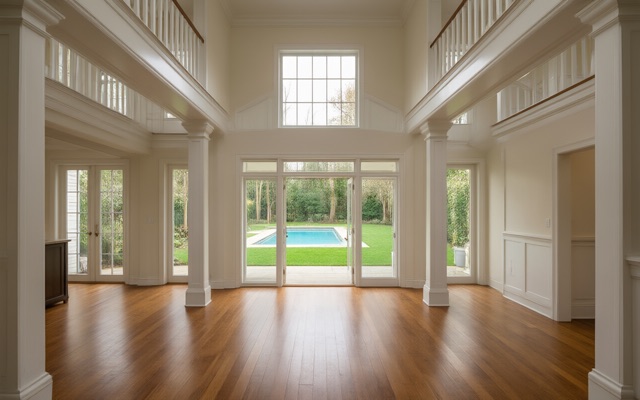
Scene Style: Suburban Mansion
Cast the fruit so nobody gets mixed up
Ten fruit in a villa can blur together. Give each one a card in step 2 and three things no other fruit shares:
- A colour and a shape that read at a glance. A strawberry and a cherry are both small and red; do not cast both.
- A face. Say it has one, and how much of a person it is: large round eyes, a small mouth, thin stick arms, short legs, walks upright.
- One accessory. Mango’s gold chain, Lemon’s sunglasses, Strawberry’s bow. It is the fastest way for viewers to tell two similar fruit apart.
A full example for a card: A plump ripe strawberry the size of a hand, glossy red with yellow seeds, a leafy green top like a little crown, large dark eyes with long lashes, a small pink mouth, thin arms and short legs, a white silk bow on the top leaf; walks upright. The card description is what the sheet is drawn from, so the bow will be there in every shot. Non-human characters: the general rules · Regenerate one sheet.


Write the confessional and the drama
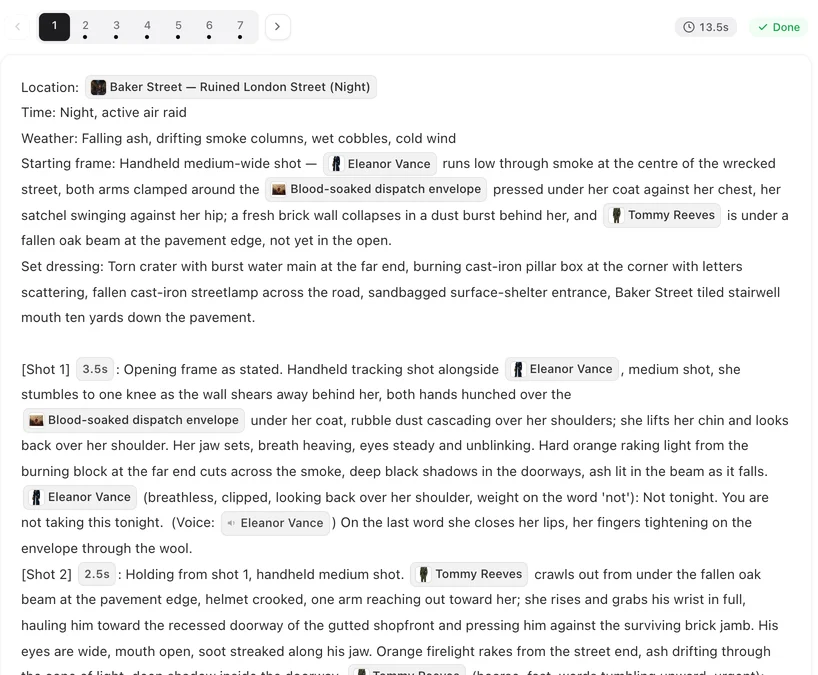
Keep each shot to three named fruit or fewer. A wide shot of the whole villa is a crowd, and a crowd loses faces; put the other contestants in the segment’s background line instead.
| Beat | Shot to adapt |
|---|---|
| The arrival | [Shot 1] 4s: Opening: wide shot, the villa pool at sunset. @Pineapple walks in through the gate, sunglasses on. The others at the pool turn. No dialogue. Ambient: a record scratch, then silence. |
| The confessional | [Shot 2] 5s: Medium shot, fixed camera, a pink sofa against a palm-leaf wall. In frame only: @Strawberry, facing the camera. @Strawberry (whispering, furious): She said she was a fruit salad. She is not a fruit salad. |
| The reaction | [Shot 3] 3s: Close-up. In frame only: @Mango. He drops his smoothie. No dialogue. Ambient: the glass shattering. |
Play it completely straight: the delivery notes are the comedy. (through her teeth), (trying not to cry), (very slowly). How to write one shot · Background people.
Voices: the fastest way to make fruit funny
Every fruit has a Voice description like any character. Cast against type: a tiny blueberry with a deep, slow, gravelly voice; a huge watermelon who is breathy and shy; the banana host bright, game-show smooth, always one beat too cheerful. A fruit with a mouth moves it when it speaks; one without a mouth does not, so give your speaking fruit a mouth. How character voices work.
Make it in SceneMixer, start to finish
- Script: write it with the fruit as named characters, or put a brief into AI Create with the format, the couples, the twist and the tone.
- Step 1: an animation style and the villa set; read the script.
- Step 2: check every fruit has a colour, a shape and an accessory of its own; regenerate any two that look alike. The first 15 setup images on an account are free.
- Storyboard: episode 1 first (free on your first project). Split any shot with more than three named fruit.
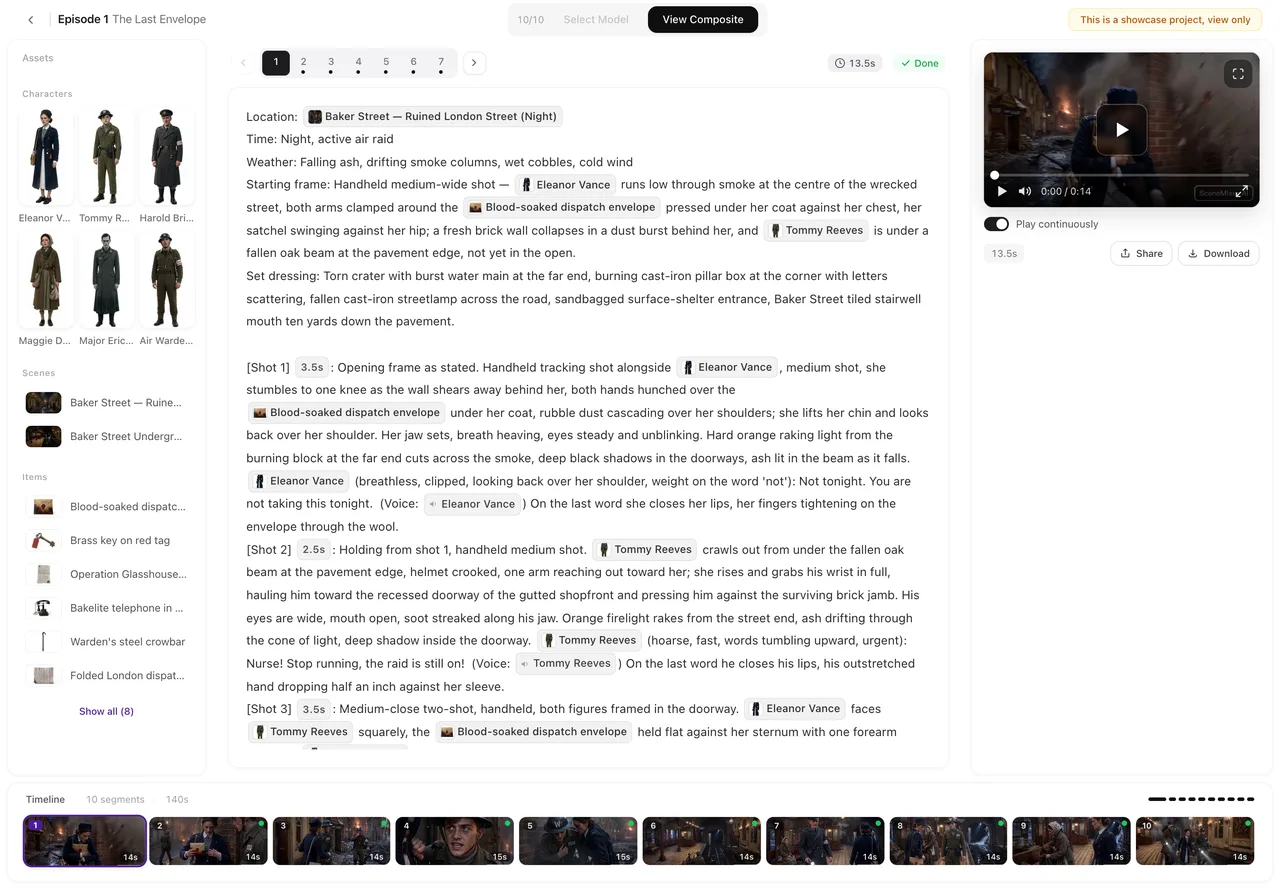
- Video: generate on the default tier at 10 credits a second; composite; post the first episode and keep the series going in the same project.
| Episode | What happens | The hook |
|---|---|---|
| 1 | Arrivals at the villa. Strawberry and Mango couple up on the first night. | A new arrival is announced — Mango goes pale. |
| 2 | Pineapple arrives and sits next to Mango at dinner. | Lemon saw them by the pool at midnight. |
| 3 | Lemon tells everyone in the confessional, then tells Strawberry to her face. | Strawberry finds Pineapple’s sunglasses in Mango’s room. |
| 4 | The Banana host calls a recoupling. | Mango chooses — and it is neither of them. |
| 5 | The finale vote. | Strawberry walks out of the villa with the one fruit nobody noticed. |
FAQ
Can I make a fruit drama on SceneMixer?
Yes. Write the fruit as characters, pick an animation style in step 1, and follow the same steps as any drama. Each fruit gets its own card, image and voice.
How do I stop two fruit looking the same?
Give each one a colour and shape no other fruit has, a face, and one accessory of its own. If two sheets still look alike, regenerate one with a sharper description.
Which style suits a fruit drama?
3D Toy Cartoon for the glossy, bright look, Feature 3D Animation for a softer one, or 2D Cel Shading for a flat cartoon. The style is fixed for the project once you continue.
How many fruit can be in one shot?
Three named fruit or fewer works best. Put the rest of the villa in the segment's background line instead of naming them.
How do the fruit talk?
Give each one a voice description and a mouth. Lines are written the same way as for people; a fruit without a mouth does not move one.
Can I make it vertical for TikTok?
Yes. Pick 9:16 Portrait in step 1. The aspect ratio is fixed once you continue.
Can I use characters from a famous show or game?
No. Known characters and franchise designs trigger the IP check. Invent your own fruit and their names.
Does a fruit drama cost less because it is animated?
No. Video is priced by the second at the tier you choose, whatever the style. Images are priced the same for every character.
Updated October 13, 2026
Pricing·Novel to Video·Guides·Samples·Support·Privacy·Terms·Legal·Contact·Affiliate program·© 2026 SceneMixer