How to make an AI heiress drama
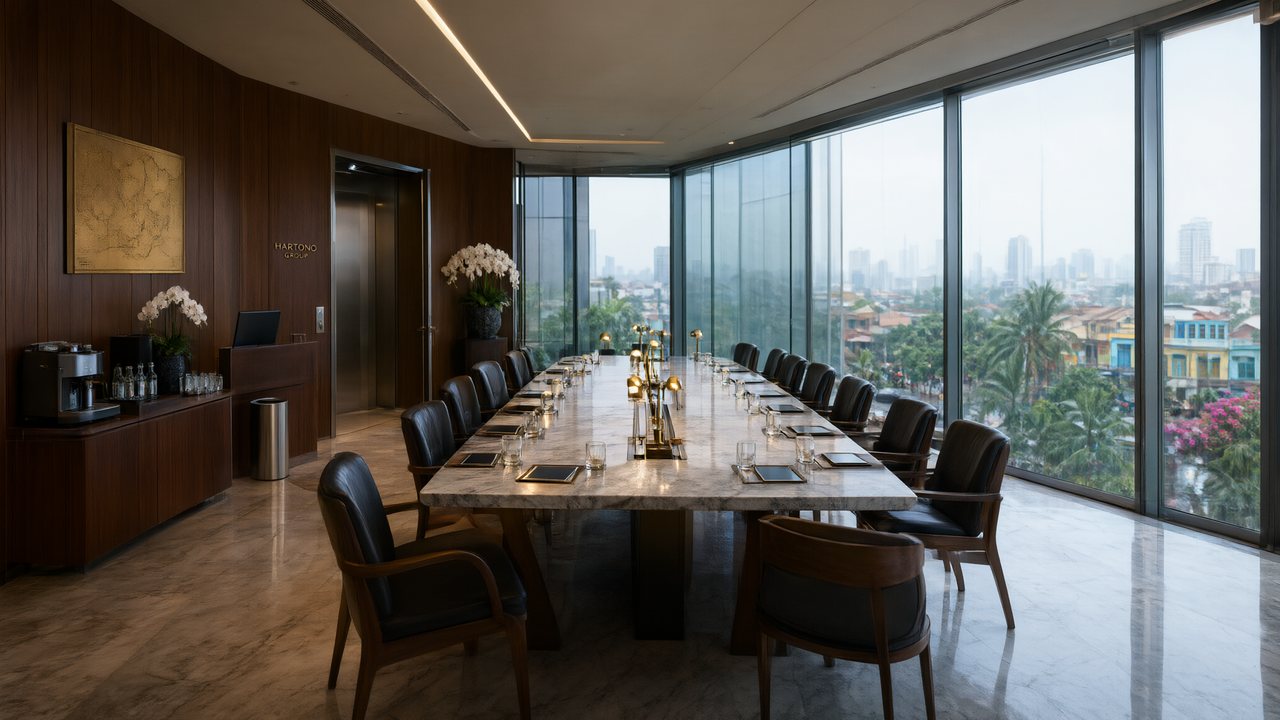
Brief for AI Create: A heiress drama: a hotel kitchen hand named Nora is the missing granddaughter of the family whose gala she serves at; the family’s adopted daughter has worn her place for twenty years; 10 short episodes, English dialogue, one rung of the secret revealed at the end of each.
What the genre runs on
Plan the secret as a ladder before you write a line. Each rung is one episode’s ending, and each one changes who knows what.
| Rung | What happens | Who learns it |
|---|---|---|
| A clue | Something small does not fit: a locket, a scar, a surname. | The audience, and one watcher |
| An ally | One person works it out and keeps quiet. | The ally |
| A near miss | She is almost exposed and the wrong person takes the blame. | Nobody on screen |
| The public reveal | The proof is shown in front of the people who wronged her. | Everyone |
Write who knows what into the script before episode 1. It is the first thing a long series loses. The same reversal drives billionaire romance and revenge dramas; this page is about the hiding.
Settings to pick in Step 1
| Step 1 setting | Choose | Why |
|---|---|---|
| Scene Style | Urban Opulence, Suburban Mansion or Corporate Cold | The family’s town house and gala hall; the estate; the company floors. |
| Costume Style | Haute Couture or Minimal Luxury | The world she was born to: gala gowns, or old money that does not show. |
| Visual Style | Digital HD, Soft Glow or Shot on Film | Live-action looks suit the genre. |
| Target Region | Follow script, Western or East Asia | Names and faces for the family you write. |
| Dialogue language | Your choice | Spoken as each clip renders. |
The costume style is the wardrobe of the whole film. Her work clothes belong in her own description, written plainly, so that her two looks are different on purpose. Why these are fixed before the script is read · Every scene and costume style.
Two names, one person
She is Nora in the kitchen and Eleanor in the family’s old letters. If the script names two characters, the storyboard will cast two people. Say once, in plain words, that they are one person — Nora, whose real name is Eleanor Hartwell — and keep using whichever name the scene needs.
When the script is read, her card keeps the other names your text uses for her on its grey Also called line. That line is read-only: it is filled by the read and by renames, and there is nothing to type into it. A word that could mean anyone (“the girl”) is not kept. Also called.
Two looks, one face
The disguise and the reveal must be the same woman. Do not make two characters. Give her one sheet and draw the second look as a state — a second sheet for the same character. After the storyboard is generated the site assigns states to segments from the story, and you can override any segment in the editor; only a state that has an image is used. Using a state in one scene · Costume changes and scene states.
What carries the likeness is the face. Describe it once in Step 2, specifically, and let the clothes, hair and make-up change around it. The same face in every shot.
The swapped daughters
A swapped-at-birth story needs two young women who read as relatives without being copies. Write the shared features into both descriptions — the same brow, the same hands, the same way of standing — and let age, grooming and clothes separate them. Do not write “twin”, and do not compare either to a real person: a named celebrity can trigger the IP check.
The proof is a prop. A locket, a bracelet or a letter is made once with its own image and named in the shots with @, so it is the same object in the clue, in the near miss and in the reveal. The same prop in every hand.
The reveal, written as shots
Do not film the crowd. Film the proof, the face that recognises it and the silence. The guests are background people; two or three named faces carry the scene. In this example @Margaret is the family’s matriarch and @Celeste is the adopted daughter. Background people in a scene.
| Beat | Shot to adapt |
|---|---|
| The room | [Shot 1] 4s: Wide shot, fixed camera. A hotel ballroom at a charity gala, a long table of guests, waiters moving between the chairs. @Nora carries a tray of glasses along the wall in a plain black server’s uniform. |
| The clue | [Shot 2] 3s: Close-up on @Nora’s hand setting a glass down. The silver chain of @Locket slips out of her collar and swings in the light. |
| The recognition | [Shot 3] 3s: Close-up on @Margaret at the head table. Her smile stops. Her eyes are on @Locket. |
| The line | [Shot 4] 4s: Medium shot. @Margaret rises from her chair and the room goes quiet. @Margaret (barely audible): Where did you get that? (voice: Margaret) |
| The silence | [Shot 5] 3s: Close-up on @Celeste beside her, a glass held halfway to her mouth. She does not move. |
How to write one shot · Hooks and cliffhangers.
Keep the humiliation on the safe side
- Describe wealth, do not brand it. A named luxury label can trip the IP check; a black sedan, a grey silk gown and a long dining table do not. If an IP check blocks a character.
- Cruelty stays small and stays on screen as a look or a spilled glass. Anything harsher is better as the moment before and the moment after. Content rules and moderation · If a clip is blocked.
Make it in SceneMixer, start to finish
- Script: paste your own on Upload Script, or write the brief in AI Create. Put the “who knows what” ladder in the first lines.
- Step 1: Type Short Drama or TV Series; scene and costume styles from the table; a visual style; Target Region; dialogue language; 9:16 Portrait or 16:9. Read the script.
- Step 2: give each woman a specific face and age; generate the second look as a state; make the locket a prop. The first 15 setup images on an account are free.
- Storyboard: episode 1 first (free on your first project). One place and one stretch of time per segment: the kitchen is one, the ballroom another.
- Video: generate on the default tier at 10 credits a second; put the episodes together and post.
| Episode | The scene | The ending beat |
|---|---|---|
| 1 | The hotel kitchen, the night before the gala. | A chain slips out of her collar in the mirror. |
| 2 | The gala; a guest notices the chain. | The hostess asks to see it, then is called away. |
| 3 | The adopted daughter finds the matching mark. | She says nothing and takes the photograph. |
| 4 | A lawyer’s office on a rainy morning. | A name on a file: Eleanor Hartwell. |
| 5 | The family’s anniversary dinner. | The locket is placed on the table. |
FAQ
How do I make an AI heiress drama?
In Step 1 pick a luxury scene style and costume style, a visual style, the region and dialogue language, then write the script around a ladder of who-knows-what and render episode by episode.
Can one woman have two names?
Yes. Say once in the script that the two names are one person. When the script is read, her card keeps the other names under Also called, which is read-only.
How do I keep her face the same in disguise and in the reveal?
Make one character and draw the second look as a state of that character. The face stays on the sheet; the clothes and hair change.
How do two daughters look related?
Write the shared features into both descriptions and let age, grooming and clothes separate them. Do not write twin, and do not compare them to real people.
Can I name a luxury brand?
Avoid it. A named brand can trigger the IP check. Describe the look instead: a black sedan, a grey silk gown.
How do I stage a reveal in front of a crowd?
Make the guests background people and give two or three named faces the reaction shots: the proof, the face that recognises it, the silence.
Is this the same as a billionaire or revenge drama?
They share the reversal. This page is about the hiding: who knows what, two names, two looks and the reveal.
Will she look the same in every episode?
Yes. Each character is drawn once and that sheet is used in every shot; her second look is a state of the same character.
Updated October 26, 2026