The Same Room in Every Episode
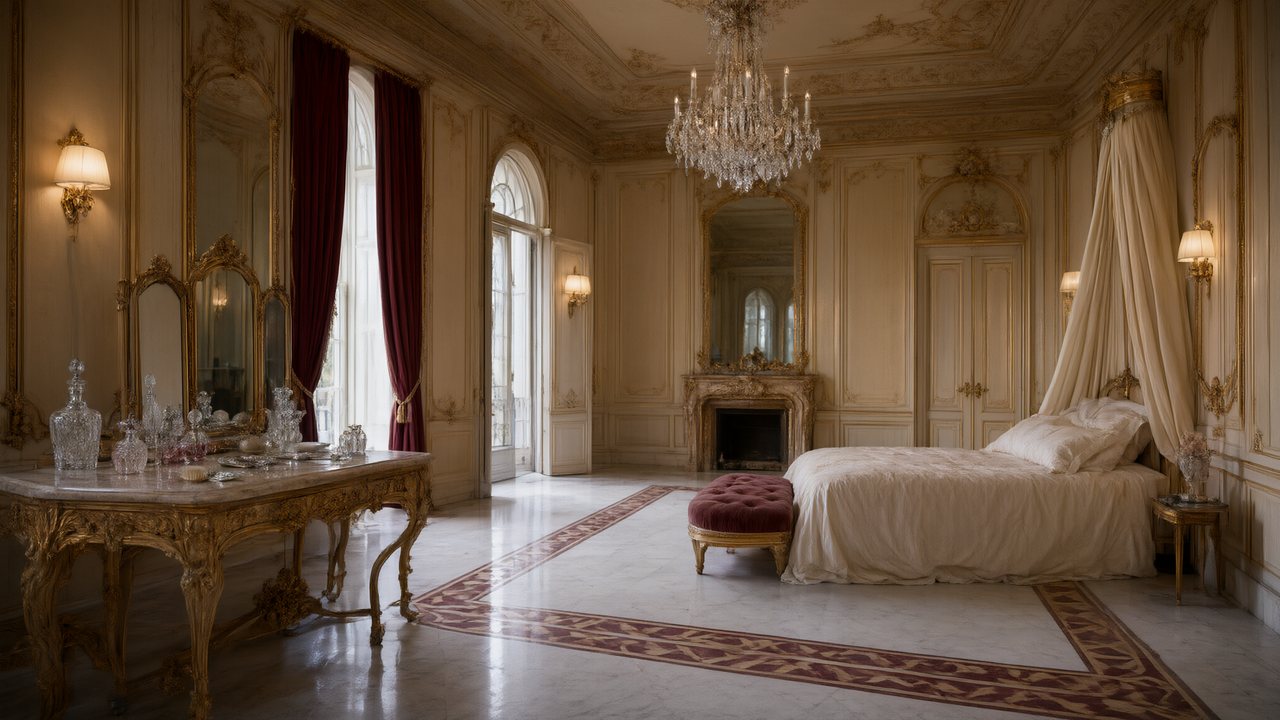
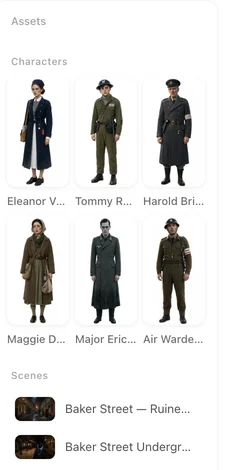
Open a finished episode, switch the left panel to Scenes, then find two segments set in the same place.
A location is made once
When the script is read, the places it happens in become the Scenes list: a kitchen, a courtyard, the front seat of a car. Each gets a description — what is in the room, what it is made of, where the light comes from — and in step 2 an image. Scene images are always widescreen, whatever aspect ratio your videos use, because they describe a place rather than a frame.
That image is the place. Every segment whose header says the scene is this kitchen is generated from it, in this episode and every later one.
What stays and what changes on top
Stays: the architecture, the furniture, the materials, the colours, where the window is. Changes per segment: time of day, weather, and what the characters are doing in it. You write those in the segment header — Time, Weather — and they are applied on top of the same room. Night in the kitchen is the same kitchen, dark. The segment header, field by field.
A room that is physically different later in the story — wrecked, redecorated, flooded — is a state of the scene: its own image, assigned to the segments where it applies. States, step by step.
One place, many angles
You are not limited to the angle of the scene image. Shots in that room can look toward the window, away from it, down the table, from the doorway. They are all the same room because the layout is held for you. How positions hold across cuts.
Changing a location
Open the scene in step 2, edit its description, regenerate. Or upload your own photo of a place. From then on, new shots use the new image; shots already generated keep the old one until you regenerate them.
To change it for one episode only, use Edit (this episode) on the scene in the editor. The rest of the series keeps the original.
Adding a place the script did not name
Add it in step 2 under Scenes, with a description, and generate the image. Then set it as the location in the segment header of the shots that happen there. From the editor, Add assets brings an existing scene into the current episode.
| You want | Where to do it |
|---|---|
| The same room in every episode | Nothing — that is the default |
| The same room at night, or in rain | Time and Weather in the segment header |
| The room after it was wrecked | A state of the scene, assigned to those segments |
| A different look for the whole series | Edit the scene in step 2 and regenerate |
| A different look in one episode | Edit (this episode) in the editor |
FAQ
Why are scene images widescreen when my videos are vertical?
A scene image describes a place, not a frame. It is always widescreen so it captures the whole room; your video shots are framed from it in whatever ratio your project uses.
Will the same location look the same in a later episode?
Yes. Every episode is generated from the same scene entry.
How do I get night, rain or dusk?
Write them in the segment header's Time and Weather fields. The room stays the same underneath.
Can I use a photo of a real place?
Yes. Upload it on the scene entry in step 2; it replaces the generated image.
Can a location change during the story?
Yes, through states: one image per version of the place, assigned to the segments where it applies.
Build your first location
Upload a script and see the places it picks out. Every scene set there will use them.
Updated September 26, 2026
Pricing·Novel to Video·Guides·Samples·Support·Privacy·Terms·Legal·Contact·© 2026 SceneMixer