How to Describe a Character’s Face So the Model Draws This Person and Not a Generic Pretty One

Open a character card and read the appearance: if you could not pick this person out of a crowd from the text alone, the model cannot either.
What the model does with a vague face
Given ‘a beautiful woman in her twenties with long black hair’, the model draws the most probable such woman — the same one it draws for everyone. Every later shot is then matched to that sheet, so the whole series inherits a stock face. Specific text is the only lever: the parse writes detailed appearances for this reason, and you can sharpen them on the card. Same Face in Every Shot.
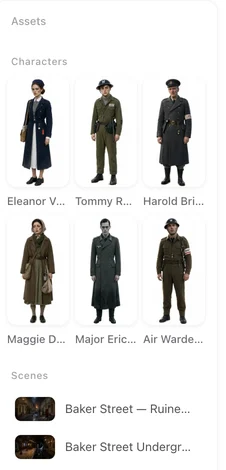
What to write, in order
Face: face shape (long, square jaw, round), brows (straight, arched, heavy), eyes (deep-set, hooded, wide-set, upturned), nose (high bridge, broad, hooked), mouth (thin, full lower lip, downturned), skin tone and texture as a person has it (freckled, weathered, olive), hair (line, cut, colour, grey at the temples), the age you see. Anchor: one thing nobody else has. Build and posture: height, frame, how they carry themselves. Clothing: last, one outfit. Chinese readers: traditional bone-structure terms work well and need no translation.
What quietly ruins the sheet
Adjectives of effect: beautiful, striking, intense. Makeup results: porcelain base, pores hidden, blush placed on the apples; the model paints the result and you get a doll. Say instead what the makeup is for (heavy stage makeup for a performer) and let texture stay. Skin results: redness at the nose, shine on the forehead; these are painted as written. ‘Neutral expression’: it erases whatever made the character readable; write the habitual expression instead (a permanent slight frown). The general rule: Describe the Cause, Not the Result.
Priority: face over outfit
A long coat or an elaborate costume, described at length, makes the model frame for the clothes and shrink the head. Keep clothing to one sentence on the sheet; costume detail belongs in the storyboard where it matters. One Outfit per Character Sheet.
Regenerate and compare
After editing the appearance, regenerate the sheet and check the anchor first: is the scar there, is the mole on the correct side? Then the bones. A sheet that gets the anchor and the face shape right will hold across shots. Regenerate One Sheet.
| Instead of | Write |
|---|---|
| A beautiful woman, long black hair | Long face, straight heavy brows, hooded eyes, high nose bridge, thin mouth; black hair cut blunt at the jaw; a small mole under the left eye |
| Handsome, charismatic man | Square jaw, deep-set eyes, a broken nose set slightly left, grey at the temples; habitual half-smile on one side |
| Flawless porcelain skin | Fair skin, fine texture kept; no retouching |
| Neutral expression | A permanent slight frown, eyes alert |
| Elegant and refined | Slim, upright, hands still; speaks little |
FAQ
The parse already wrote a detailed appearance; should I still edit?
Read it. If it contains result words (porcelain, hidden pores, redness) or no anchor, fix those; otherwise leave it.
Can I describe makeup at all?
Yes, by purpose and style (heavy stage makeup, dark lips), not by what it hides.
Why did my character get a red nose?
A line described redness on the skin; the model painted it. Remove the line.
Does the visual style change any of this?
No. Style changes the drawing; the description still has to name the person.
Can I upload a photo instead?
On a paid plan, yes, if you have the rights; it then serves as the sheet and the text matters less.
Updated September 27, 2026
Pricing·Novel to Video·Guides·Samples·Support·Privacy·Terms·Legal·Contact·© 2026 SceneMixer